


Akku Yadav: The Serial Rapist Who Was Killed by His Victims in an Indian Courtroom
Updated: 16 hours ago

On August 13, 2004, a man named Bharat Kalicharan Yadav was brought to Courtroom No. 7 at the Nagpur District Court in Maharashtra, India, for a bail hearing. He'd been arrested less than a week earlier. Nobody who knew him expected this arrest to stick any more than the previous 14 had. He was known to everyone in Kasturba Nagar simply as Akku Yadav, and for 13 years the slum community there had lived under his terror. He walked in that morning with the same swagger he always had. He didn't walk out.
Within 15 minutes, Akku Yadav had been stabbed more than 70 times, had chili powder thrown in his face and forced into his mouth, and had his penis severed with a kitchen knife. His killers were mostly women. Many of them were his victims. When police regained control of the courtroom and asked who was responsible, every woman in the room raised her hand.
The Making of a Monster
Akku Yadav was born in 1971 in Kasturba Nagar, a dense slum in central Nagpur. His father was a milkman. He left school after class 7. By his own community's account, author Swati Mehta later wrote in her book Killing Justice: Vigilantism in Nagpur, he had graduated from being a milkman's son to a local menace before he was old enough to shave.
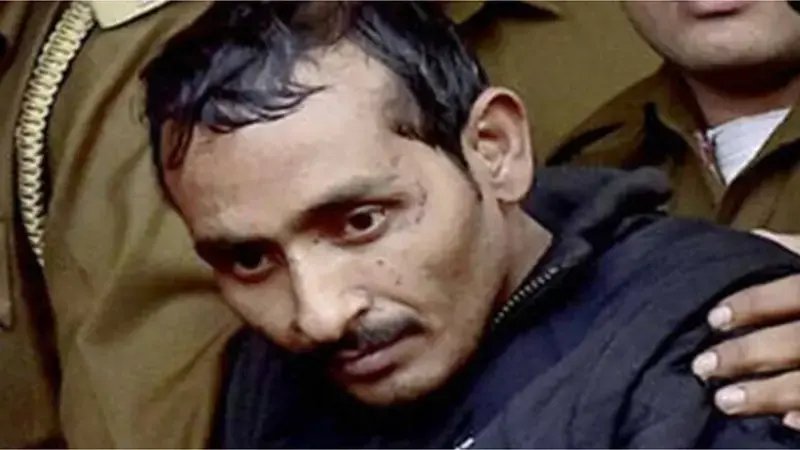
His first confirmed rape was in 1991, when he and his gang kidnapped a woman near an abandoned building they used as a base. She reported it to Jaripatka police station. Officers there were already receiving bribes from Yadav's extortion racket. They initially ignored her complaint. When a formal report was eventually filed and Yadav was arrested, the case never made it to court. After posting bail, he broke into the woman's home and beat both her and her husband. She never reported him again. As it turned out, this was the only rape he was ever formally reported to police for.
Over the following 13 years, Yadav raped more than 40 women and girls, some as young as 10. He murdered at least three people. He extorted money and goods from daily-wage labourers, domestic workers, and small business owners throughout the slum. He'd arrive at homes at 4am, claim to be police, force his way in, stab husbands, lock them in bathrooms, and drag women away. He cut off a woman's ears for her earrings and her fingers when her rings wouldn't come off. He directed his gang to gang-rape a 12-year-old girl as a warning to her family.
How He Kept Getting Away With It
Yadav stayed free through a combination of corruption, intimidation, and caste politics. He bribed police officers with cash and alcohol. He tipped them off when he found out complaints had been filed against him. In one documented case, a woman who reported him was subsequently gang-raped by police officers at the station. A post-lynching survey found that 73 percent of Kasturba Nagar residents said they'd stopped filing complaints because they knew nothing would happen, and feared retaliation.

The local Jaripatka police were later found by a court to have been effectively in business with Yadav. He also had political protection: local politicians were among those who benefited from his network and helped shield him from sustained prosecution. Most residents of Kasturba Nagar were Dalit, from the lowest rungs of India's caste system. Their complaints carried little weight with officers who saw the slum as someone else's problem.
He was arrested 14 times in total. Each time, bail was granted. He'd return to Kasturba Nagar and pick up where he'd left off. Sometimes he'd specifically target whoever had reported him. After one arrest, he was released on the grounds of good behaviour. After another, he walked free because witnesses were too frightened to testify.
The Murder of Asha Bhagat
The most significant of Yadav's murders, in terms of what it set in motion, was that of Asha Bhagat in 1999. Bhagat ran a small alcohol business in the slum and was one of the very few people in Kasturba Nagar who wasn't afraid of him. When Yadav began extorting money from her customers and assaulting women in her orbit, she organised a group of men to attack him. They got him drunk and beat him. He survived.
Yadav waited and then went to Bhagat's home. He slit her throat, cut off her ears and breasts, and stole her jewellery. He did all of this in front of her teenage daughter, Megha, who was so traumatised she couldn't testify against him in court. The case collapsed. Yadav walked free. Bhagat's sister, Resha Raut, later became one of the key figures in the events of August 2004.
The Day the Women Walked to Court
In early August 2004, a woman named Usha Narayane finally fought back openly against Yadav. After he and his gang threatened her, the community organised and burned down his house. Yadav went to police claiming he needed protection. Officers, perhaps calculating that he was becoming more trouble than he was worth, arrested him. His bail hearing was set for August 13.
Word spread through Kasturba Nagar that he was going to be released again. Women didn't organise a formal protest. They simply started walking toward the courthouse, in ones and twos and then in groups, carrying the tools they had to hand: vegetable knives, stones, chili powder. Between 200 and 400 people gathered outside Courtroom No. 7.
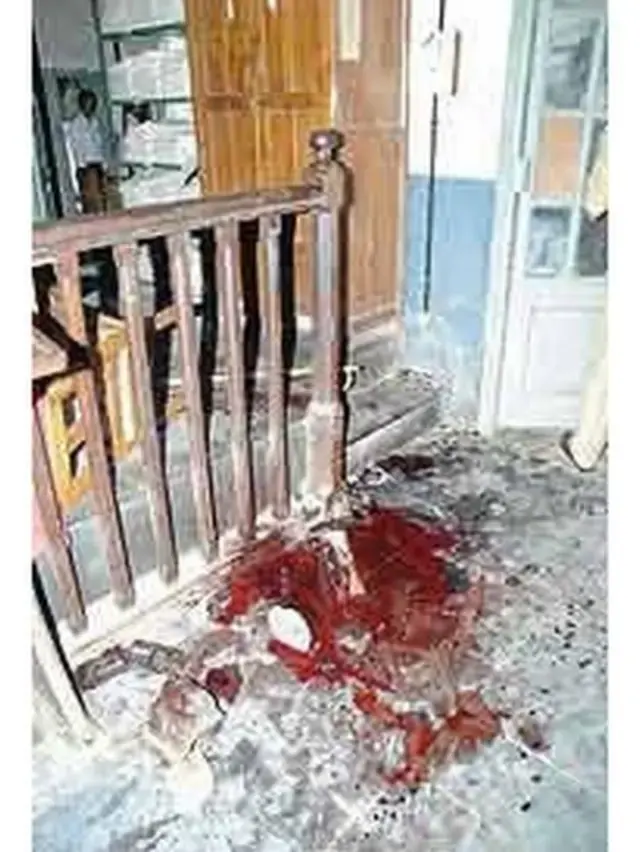
When Yadav was brought in, he was escorted by just two or three unarmed constables. He spotted a woman in the crowd he'd previously raped and called her a prostitute. She took off her sandal and hit him, shouting: 'We can't both live on this earth together. It's you or me.' The room erupted. Women surged forward, overpowering the constables. They threw chili powder in Yadav's face and at officers who tried to intervene. Within minutes he was on the floor. He begged for his life, reportedly crying: 'Forgive me! I won't do it again!' It made no difference. He was stabbed more than 70 times. His body was left in a pool of blood on the courtroom floor.
Arrest Us All
When police regained control, every woman in the room raised her hand. 'Arrest us all,' they said. The strategy was deliberate and effective: collective responsibility made it impossible to single out individuals. Five women, including Usha Narayane and Anjanabai Borkar, Asha Bhagat's mother, were eventually arrested on murder charges. Within days, 400 residents stormed the court demanding they be freed. More than 100 lawyers volunteered to defend the accused for free. Bail was granted amid public pressure.
The women were unapologetic. They framed what they'd done explicitly as social justice and a form of the freedom struggle. Trade union leader V. Chandra publicly called the killing justified. The case became a flashpoint in India for debates about vigilantism, gender violence, caste, and the limits of a justice system that had utterly failed a community for over a decade.
The Verdict, Ten Years Later
The murder trial formally began in August 2012, eight years after the killing. Twenty-one people were charged, including 14 men and 7 women. Three died during the course of proceedings. The investigation was shambolic: key forensic evidence was never properly analysed, police officers who'd filed original reports contradicted themselves under cross-examination, and the court acknowledged that the local police had not just failed to protect victims but had in some cases actively assisted Yadav.
In November 2014, the District and Sessions Court in Nagpur acquitted all 18 surviving accused on the grounds that there was no clinching evidence to prove individual guilt. The verdict was delivered in the same courtroom where Yadav had been killed a decade earlier.
Nobody was ever punished. The Netflix docuseries Indian Predator: Murder in a Courtroom, released in 2022, brought the story to a global audience. Resha Raut, Asha Bhagat's sister, appears in it. So does Vilas Bhande, another accused who had been directly threatened by Yadav in the weeks before his death. The series frames the killing not as a descent into lawlessness but as what happens when a community is given no other option. It's hard to argue with that conclusion.
For a very different answer to a justice system that failed women, read about Franca Viola, the Sicilian teenager who took her rapist to court in 1966 and helped get Italy's law changed.
Sources
2. Thar Tribune: Akku Yadav Was the Demon of Kasturba Nagar Until a Courtroom Mob Killed Him in 2004


