


The Yorkshire Ripper: How Peter Sutcliffe Got Away With Murder for Five Years

For five years in the late 1970s, women across the North of England changed the way they lived. They stopped walking home alone. They waited at bus stops in pairs. Husbands, brothers and dads drove to factory gates to collect them. Police were even advising women to stay indoors after dark. All because of one man the papers called the Yorkshire Ripper.
That man turned out to be Peter Sutcliffe, a softly spoken lorry driver from Bradford with a wife, a mortgage and a neat semi on Garden Lane. Detectives had sat across from him nine times. They'd held a £5 note that led straight to his employer. They'd photographed his boot prints and his tyre tracks. And still he kept killing, partly because the biggest manhunt in British history had been sent chasing a man who didn't exist. This is the full story of the Yorkshire Ripper, the women he killed and how a pair of Sheffield bobbies finally stopped him almost by accident.
Quick Answers
Who was the Yorkshire Ripper? Peter William Sutcliffe, a lorry driver and former gravedigger from Bingley in West Yorkshire.
How many people did he kill? He was convicted of murdering 13 women and attempting to murder seven more between 1975 and 1980.
When and how was he caught? On 2 January 1981 in Sheffield, after two officers on patrol spotted false number plates on his car.
What sentence did he get? Twenty life sentences in May 1981, later turned into a whole life order in 2010.
When did he die? On 13 November 2020, aged 74, after catching Covid-19 while serving his sentence at HMP Frankland.

Who Was Peter Sutcliffe?
Peter William Sutcliffe was born in Bingley, West Yorkshire, on 2 June 1946, the eldest of six children. By most accounts he was a shy, small lad who clung to his mum and was bullied at school. He left at 15 and drifted through a run of labouring jobs, including a spell digging graves at Bingley Cemetery in the mid-1960s.
That graveyard job became central to the story he'd later tell. Sutcliffe claimed that while working there he heard a voice coming from a headstone, which he said belonged to a Polish man named Bronisław Zapolski. He insisted it was the voice of God and that it ordered him to kill prostitutes. Whether he believed it, or whether it was a story cooked up to avoid a murder conviction, became the big question at his trial.
In 1974 he married Sonia Szurma, a Czechoslovakian-born teacher he'd been seeing since his early twenties. The couple bought a detached house at 6 Garden Lane in Heaton in Bradford. Sutcliffe eventually landed a steady job driving lorries for a haulage firm called T and W H Clark. On paper he was the dull, respectable bloke next door.
But the police had come across him long before anyone used the word Ripper. Reporting on the later inquiry into the case noted that Sutcliffe had come to police attention twice in 1969 over incidents involving prostitutes. On one of those occasions he was caught in a garden in Bradford's red light district carrying a hammer. He was fined for going equipped to steal, and nobody thought much more about it.
The First Attacks in 1975
Sutcliffe's first known attacks came in the summer of 1975, and every one of the women survived. In July he hit Anna Rogulskyj over the head with a hammer in an alleyway in Keighley. In August he attacked Olive Smelt in Halifax, using the same method. Smelt told detectives her attacker had a local accent, a detail that would later be ignored when it mattered most.

He was out with his friend Trevor Birdsall the night he attacked Olive Smelt. Birdsall would turn up again in this story five years later, and his role is one of the most frustrating parts of the whole case.
On 30 October 1975, Sutcliffe killed for the first time. Wilma McCann was a 28-year-old mother of four from Chapeltown in Leeds. He struck her with a hammer and stabbed her on playing fields not far from her home, where her young children were waiting for her to come back. Her son Richard was five years old. Decades later, he'd become one of the loudest voices calling out the way the police treated his mum's memory.
How the Killings Escalated
In January 1976 Sutcliffe murdered Emily Jackson, a 42-year-old mum from Morley who'd turned to sex work to help with money troubles. The attack was so violent that he left the print of his boot on her thigh. It was the first of several physical clues police would gather and fail to connect to the right man.
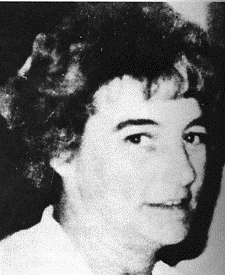
Later that year he attacked Marcella Claxton in Roundhay Park in Leeds. She survived, though she lost the baby she was carrying. Claxton gave police a decent description of her attacker, but her evidence was waved away. As ITV's drama The Long Shadow later highlighted, detectives decided she wasn't a sex worker and so couldn't be a Ripper victim. That one assumption would shape the inquiry for years.
In 1977 the pace picked up. Irene Richardson, 28, was killed in Roundhay Park in February. Patricia "Tina" Atkinson, 32, was murdered in her own flat in Bradford in April, where Sutcliffe left another boot print on her bedsheet. Then in June he killed Jayne MacDonald, a 16-year-old shop assistant walking home through Chapeltown after a night out. Her body was found by children in a playground the next morning.
Jayne's murder changed everything. The press had already borrowed the name of Victorian London's most notorious killer, and now the Yorkshire Ripper was national news. Assistant Chief Constable George Oldfield was put in charge. A month later Sutcliffe attacked Maureen Long in Bradford, leaving her for dead on waste ground. She survived too.
The £5 Note That Should Have Ended It
On 1 October 1977, Sutcliffe drove over the Pennines to Manchester and picked up Jean Jordan, a 20-year-old mum of two originally from Scotland. He paid her with a brand new £5 note from his wage packet, then killed her on allotments next to Southern Cemetery in Chorlton.
Back home, he realised a crisp new note could be traced. Over a week later, on the day he'd hosted a family housewarming party, he drove back to Manchester to find it. He couldn't. Jean had tucked it into a hidden compartment in her handbag, which had been thrown into nearby shrubs. In frustration he mutilated her body and even tried to remove her head to make it look like a different killer's work.
Her body was found on 10 October by a local man named Bruce Jones, who years later became famous playing Les Battersby on Coronation Street.
The note was the breakthrough police had been praying for. Detectives traced its serial number to a batch issued through Midland Bank branches in Shipley and Bingley, then narrowed it down to the payrolls of a few dozen local firms. One of them was T and W H Clark, the hauliers who employed Sutcliffe. Officers interviewed around 5,000 men, Sutcliffe included, in November 1977. He told them he'd been at the family party, his wife and mum backed him up and the line of inquiry was eventually dropped as too time consuming.
Nine Interviews and a Pair of Boots
The £5 note interview was only the first. Over the course of the inquiry, Sutcliffe was spoken to by detectives nine separate times, the first of them coming after he'd already killed six women. His name came up again and again because his car kept being logged in red light districts in Leeds, Bradford and Manchester.
Some of the near misses are almost hard to believe. On one visit, officers showed him a photo of the Ripper's boot print from a murder scene. They didn't notice he was wearing the exact same boots as they spoke. Tyre tracks at another scene had narrowed the killer's car down to a handful of models, including the Ford Corsair. Sutcliffe was driving a Corsair at the time, but nobody looked at his tyres.
Meanwhile the killing went on. In December 1977 he attacked Marilyn Moore in Leeds, and she survived to help put together a photofit that looked a lot like him. In 1978 he murdered Yvonne Pearson, 21, in Bradford, Helen Rytka, 18, in Huddersfield and Vera Millward, 40, in the grounds of Manchester Royal Infirmary. Then, after an 11-month gap, he killed Josephine Whitaker, a 19-year-old building society clerk, as she walked home across Savile Park in Halifax in April 1979.
Josephine wasn't a sex worker and neither, of course, was Jayne MacDonald. The idea that the Ripper only targeted one kind of woman was falling apart. But the investigation was about to be knocked completely off course.
Wearside Jack: The Hoax That Cost Lives
Starting in March 1978, George Oldfield received a series of letters from a man claiming to be the Ripper. They were signed "Jack" and posted in Sunderland. Then, in June 1979, a cassette tape arrived. A man with a thick North East accent taunted Oldfield directly, opening with “I'm Jack. I see you're having no luck catching me.”
Police were convinced it was genuine. One of the letters mentioned the 1975 murder of Joan Harrison in Preston as a Ripper killing, and saliva on an envelope pointed to blood group B, a fairly rare group that matched other evidence. The tape was played to the public on phone lines and at football grounds, and dialect experts placed the voice in the Castletown area of Sunderland.
Those same experts had their doubts, though. Leeds University linguists Stanley Ellis and Jack Windsor Lewis later said they'd asked police to treat the tape as a hoax and were ignored. Instead, the inquiry started ruling men out if they didn't have a Wearside accent. Peter Sutcliffe, a Bradford lad with a Bradford voice, sailed through.
Just weeks after the tape arrived, Sutcliffe killed Barbara Leach, a 20-year-old student at Bradford University. He went on to murder two more women and attack several others while detectives hunted for a Geordie. After his arrest, he told police exactly what the hoax had done for him: “While ever that was going on, I felt safe.”
The hoaxer stayed hidden for more than a quarter of a century. In 2005 a cold case team led by Detective Chief Superintendent Chris Gregg recovered DNA from the gum on one of the envelopes. It matched John Humble, an unemployed labourer from Sunderland whose profile had been added to the national database after a drunkenness arrest in 2001. Humble was living about a mile from Castletown. He admitted perverting the course of justice and was handed an eight-year sentence in 2006. He told police he'd been obsessed with Jack the Ripper and had probably been drunk when he posted the letters. He died in South Shields in 2019, aged 63.
The Final Killings and a Letter Nobody Read
By 1980 fear in West Yorkshire had become part of everyday life. Women's groups in Leeds had already started the Reclaim the Night marches in 1977, partly in anger at being told to stay indoors while a man roamed free. Police appeals were plastered on billboards. Every bloke with a beard was looked at sideways.
In August 1980 Sutcliffe strangled Marguerite Walls, a 47-year-old civil servant, in Farsley near Pudsey. Because he'd used a ligature rather than his usual hammer, her death wasn't immediately linked to the Ripper. In September he attacked Upadhya Bandara, a doctor visiting from Singapore, in Headingley. In November he attacked 16-year-old Theresa Sykes in Huddersfield. Both survived.
On 17 November 1980, he killed his final victim. Jacqueline Hill was a 20-year-old English student at Leeds University who'd got off a bus near her halls of residence in Headingley. Her handbag was found that night with blood on it, but her body wasn't discovered until the next morning.
Here's the really maddening bit. Around the same time, Trevor Birdsall, the friend who'd been with Sutcliffe the night Olive Smelt was attacked back in 1975, sent police an anonymous letter naming Peter Sutcliffe as the Ripper. He then went into Bradford police station in person to repeat it. The paperwork ended up, as the official review later put it, sitting in a filing tray in the incident room. It was still there when Sutcliffe was arrested.
Caught by Two Sheffield Bobbies
In the end, it wasn't a detective, a database or a forensic breakthrough that caught the Yorkshire Ripper. It was a routine patrol on an icy Friday night.
On 2 January 1981, Sergeant Bob Ring and probationary constable Robert Hydes were driving through the red light area of Sheffield. They spotted a brown Rover parked in the driveway of Light Trades House on Melbourne Avenue in Broomhill, with a woman named Olivia Reivers in the passenger seat. The driver said his name was Peter Williams and that Olivia was his girlfriend, though he couldn't tell them her name.
When Ring radioed the registration through, it came back as false number plates. They actually belonged to a Skoda. While the officers dealt with that, Sutcliffe asked if he could nip behind a nearby storage tank to relieve himself. They let him. He used those few seconds to ditch a ball-pein hammer and a knife in the bushes. Later, at the police station, he hid a second knife in a toilet cistern.
Sutcliffe was taken to Dewsbury, where the Ripper Squad noticed his name was already in their card index several times over. The next day, Bob Ring went back to Melbourne Avenue on a hunch and found the hammer and knife where Sutcliffe had dropped them. Faced with that, and after nearly two days of questioning, Sutcliffe calmly admitted he was the Yorkshire Ripper. He later confessed that Olivia Reivers would almost certainly have been his next victim if the officers hadn't turned up.

The Trial at the Old Bailey
Sutcliffe's trial began at the Old Bailey in May 1981. He pleaded not guilty to murder but guilty to manslaughter on the grounds of diminished responsibility, claiming he'd been on a mission from God. Remarkably, the prosecution, led by Attorney General Sir Michael Havers, was ready to accept that plea after psychiatrists diagnosed him with paranoid schizophrenia.
The judge, Mr Justice Boreham, wasn't having it. He refused to accept the plea and insisted a jury decide. Prosecutors then argued that Sutcliffe had invented the divine voices to dodge a murder conviction, pointing to evidence he'd told a prison officer he expected to spend about ten years in a psychiatric hospital.
Havers himself became part of the controversy. In his opening speech he drew a line between victims who'd been sex workers and those who hadn't, describing the deaths of the latter as the saddest part of the case. The remark caused outrage among campaigners and still gets quoted today as a summary of how the establishment viewed these women.
On 22 May 1981, the jury found Sutcliffe guilty of 13 murders and seven attempted murders by a majority of ten to two. He was given 20 life sentences, with the judge recommending he serve at least 30 years.
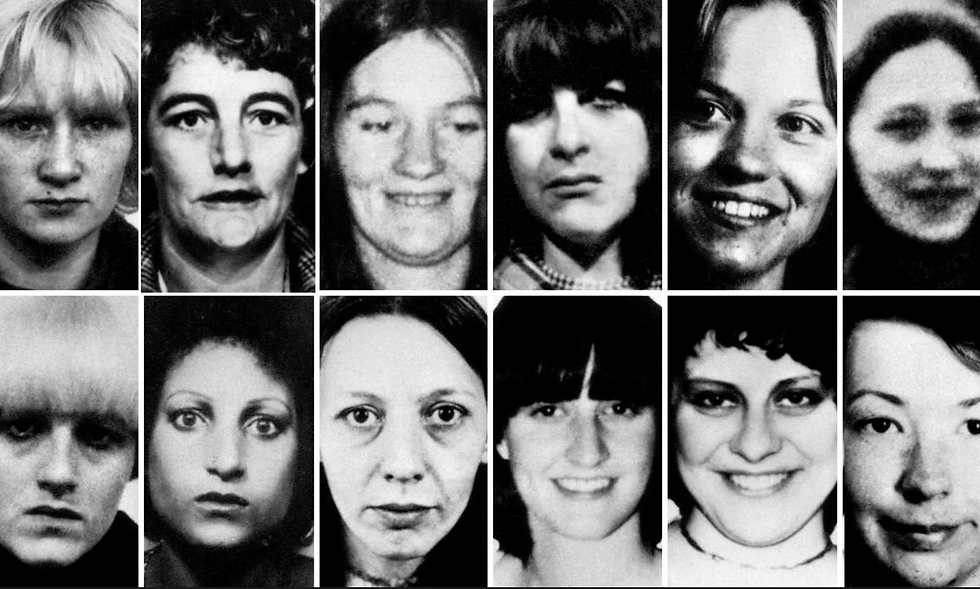
The 13 Women Killed by the Yorkshire Ripper
It's far too easy for stories like this to be all about the killer. These are the women whose lives he took. Each had family and friends who've lived with the loss ever since.
Wilma McCann, 28, Leeds, October 1975
Emily Jackson, 42, Leeds, January 1976
Irene Richardson, 28, Leeds, February 1977
Patricia "Tina" Atkinson, 32, Bradford, April 1977
Jayne MacDonald, 16, Leeds, June 1977
Jean Jordan, 20, Manchester, October 1977
Yvonne Pearson, 21, Bradford, January 1978
Helen Rytka, 18, Huddersfield, January 1978
Vera Millward, 40, Manchester, May 1978
Josephine Whitaker, 19, Halifax, April 1979
Barbara Leach, 20, Bradford, September 1979
Marguerite Walls, 47, Pudsey, August 1980
Jacqueline Hill, 20, Leeds, November 1980
Seven more women survived attacks he was convicted for: Anna Rogulskyj, Olive Smelt, Marcella Claxton, Maureen Long, Marilyn Moore, Upadhya Bandara and Theresa Sykes. Many of them lived with serious injuries and trauma for the rest of their lives.
Life Behind Bars
Sutcliffe started his sentence at Parkhurst on the Isle of Wight, where in 1983 a fellow prisoner slashed his face with a broken coffee jar. In 1984 he was moved to Broadmoor high security hospital after being diagnosed with paranoid schizophrenia. He spent the next 32 years there.

Broadmoor didn't keep him entirely safe either. In 1997 another patient attacked him with a pen and he lost the sight in his left eye. He also changed his surname to Coonan, his mother's maiden name, though nobody outside the system ever called him anything but Sutcliffe or the Ripper.
In 2010 the High Court ruled that he should never be released, turning his sentence into a whole life order. In 2016 he was judged well enough to go back into the mainstream prison system and was transferred to HMP Frankland in County Durham. He died on 13 November 2020 in hospital, aged 74, after contracting Covid-19. Reports at the time said he'd refused treatment.

The Byford Report: What Went Wrong
Straight after the trial, Home Secretary William Whitelaw asked Lawrence Byford, one of Her Majesty's Inspectors of Constabulary, to find out how the Ripper had stayed free for so long. His report landed in December 1981. Parliament heard a summary in January 1982, including the conclusion that there was “little doubt that he should have been arrested earlier”. The full report was kept under wraps until the Home Office released it in 2006 under the Freedom of Information Act.
Byford's findings made grim reading. The main problems he picked out were:
Too much paper. The inquiry gathered tens of thousands of statements, a quarter of a million names and millions of car registrations, all on index cards with no computer to cross-reference them.
Blind faith in the hoax. Treating the Wearside Jack tape as genuine meant, in Byford's words, that “all of the eggs were in the same basket”.
Ignored survivors. Photofits from women who'd survived were never properly laid side by side, and attacks on women who weren't sex workers weren't linked to the series.
Missed connections. Sutcliffe's nine interviews were never pulled together, so no single officer saw the full picture.
Lost and buried information. Reports went missing and Trevor Birdsall's tip-off sat unread until it was too late.
The fallout reshaped British policing. The failures of the Ripper inquiry led directly to HOLMES, the Home Office Large Major Enquiry System, a computer database that's been used in major investigations across the UK since the mid-1980s. It's a long way from what happened in the Soviet Union, where a similarly bungled hunt let the Rostov Ripper, Andrei Chikatilo, keep killing for twelve years.
“Innocent” Victims and an Apology 40 Years Late
One of the ugliest parts of the case was how the victims were talked about. Police and press drew a constant line between sex workers and "innocent" women. When Jayne MacDonald was killed, she was widely described as the Ripper's first innocent victim, as if the women before her somehow didn't count. In 1979 Assistant Chief Constable Jim Hobson went on record suggesting the killer had moved on from prostitutes to respectable girls, and urged the public to help catch him before more innocent women died.
For families like the McCanns, that language stung for decades. On the day Sutcliffe died in 2020, Wilma McCann's son Richard publicly called on West Yorkshire Police to say sorry. Within hours, Chief Constable John Robins did exactly that, apologising for the "language, tone and terminology" used by senior officers and admitting it was “as wrong then as it is now”.
It echoed a wider rethink about how serial killers' victims get remembered. The same lazy labelling has stuck to the women of Whitechapel in 1888, and as historians have shown, the prostitute myth around Jack the Ripper's victims doesn't hold up either.
Did the Yorkshire Ripper Kill More Women?
Most people who've studied the case think 13 is probably not the full total. The Byford Report itself pointed to what it called a curious and unexplained lull between 1969, when Sutcliffe first came to police attention, and 1975, when the first recognised attack happened. Byford suspected he'd been responsible for other attacks during that period and listed a further batch of unsolved cases that fitted the pattern.

In 1992 Sutcliffe admitted attacking 14-year-old Tracy Browne in Silsden in August 1975, a case he was never charged with. Another survivor, Mo Lea, who was attacked in Leeds in 1980, was later told Sutcliffe had admitted to her attack too. West Yorkshire Police revisited the cases listed by Byford, and by 2018 the force said it had no plans to bring further charges.
One murder that's been firmly ruled out is Joan Harrison, the Preston woman the hoax letters had claimed for the Ripper. In 2011 DNA evidence linked her death to a different man, Christopher Smith, who'd died in 2008. The killing that helped send the inquiry chasing a phantom Geordie wasn't even Sutcliffe's.
Nearly half a century on, the Yorkshire Ripper case still ranks alongside the crimes of men like Dennis Nilsen as one of the darkest chapters in modern British crime. But what really sets it apart isn't just the brutality. It's the sheer number of times he could have been stopped, and wasn't.

Suggested Reading
Want to go deeper into the Yorkshire Ripper case? These books are well worth your time.
Wicked Beyond Belief: The Hunt for the Yorkshire Ripper by Michael Bilton. The definitive account of the police hunt, built on access to the original inquiry files. It's also the book ITV's The Long Shadow was based on.
Somebody's Husband, Somebody's Son by Gordon Burn. A brilliantly written portrait of Sutcliffe's life and the West Yorkshire world he grew up in, drawing on interviews with people who knew him.
Just a Boy by Richard McCann. Wilma McCann's son tells the story of losing his mum to the Ripper at five years old and what came after. Hard going in places but incredibly moving.
As an Amazon Associate, Utterly Interesting earns from qualifying purchases.
You Might Also Like
Sources
The Yorkshire Ripper Files: Who was the hoaxer Wearside Jack?, Yorkshire Post
Reign of the Ripper: How his terror engulfed Yorkshire, Yorkshire Post
How was the Yorkshire Ripper Peter Sutcliffe caught?, Yorkshire Evening Post
Wearside Jack: Hoaxer who helped Yorkshire Ripper from 100 miles away, Yorkshire Evening Post
40 years on: catching the Yorkshire Ripper, Crime+Investigation
Yorkshire Ripper: How mass murderer's reign of terror finally came to an end in Sheffield, The Star, Sheffield
The Long Shadow on ITV: All the times the authorities almost caught Peter Sutcliffe, Yahoo News UK
Stanley Ellis and Jack Windsor Lewis on Yorkshire Ripper hoax tapes, Learning on Screen, LBC/IRN archive
Humble in court over Ripper hoax, Teesside Gazette
Yorkshire Ripper hoaxer 'Wearside Jack' found dead, Sheffield Telegraph
The Yorkshire Ripper Case, House of Lords debate, 19 January 1982, Hansard
Sir Lawrence Byford report into the police handling of the Yorkshire Ripper case, Home Office, GOV.UK
Report into the investigation of the series of murders and assaults on women in the North of England, The Secret Library, Leeds University Library
"Yorkshire Ripper" thought to have committed more crimes, Reuters via OneIndia
No new charges for Yorkshire Ripper, Police Professional
West Yorkshire Police apologise to families of Yorkshire Ripper's victims, Channel 4 News


