The Life And Murder of Martin Luther King's Mother, Alberta King

On 30 June 1974, six years almost to the week after her son was assassinated in Memphis, Alberta King finished playing "The Lord's Prayer" on the organ at Ebenezer Baptist Church in Atlanta. As the congregation bowed their heads in prayer, a young man stood up on a pew at the front of the church and shouted, "I'm taking over here!" He pulled out two pistols and opened fire. Her grandson, sitting nearby, watched her get shot and scream. She was 69 years old, and the man who killed her had originally planned to kill her husband instead.
Alberta Christine Williams King, was more than just the mother of Dr. Martin Luther King Jr.—she was responsible for shaping the foundation on which the civil rights leader stood. King often spoke of the positive influence his mother had on his moral development, deeming her "the best mother in the world." In a piece he wrote as a student at Crozer Theological Seminary, he described his mother as being "behind the scene setting forth those motherly cares, the lack of which leaves a missing link in life."
Early Life and Education
Alberta was born in 1904 to Reverend Adam Daniel Williams and Jennie Celeste Parks Williams, a couple devoted to their church and community. Her father, the pastor of Ebenezer Baptist Church in Atlanta, instilled a strong sense of faith in Alberta from a young age. Excelling academically, she graduated from the Spelman Seminary (now Spelman College) and pursued further studies at Hampton Normal and Industrial Institute (now Hampton University), where she earned a teaching certificate in 1924.
While preparing for her teaching career, Alberta met Martin Luther King Sr., then known as Michael King. Their connection came through Michael's sister, who boarded with Alberta's family. Their romance quickly grew, and Alberta announced their engagement after completing her studies. The couple married on Thanksgiving Day in 1926, and Alberta's life as an educator, church leader, and mother began.
Family Life and Instilling Values
After their wedding, Alberta and Michael moved into the Williams family home, where they lived with her parents. It was here that their three children were born: Willie Christine King in 1927, Martin Luther King Jr. (then Michael Jr.) in 1929, and Alfred Daniel Williams King in 1930. This home, designated in 1980 as part of the Martin Luther King Jr. National Historical Park, became the centre of family life and early education for the King children.
Alberta was an instrumental figure in shaping her children's values and outlook on life. Martin Luther King Jr. often credited his mother with teaching him about dignity, resilience, and justice. She explained the harsh realities of racism and segregation to him at a young age, describing it as a "social condition" rather than a "natural order." Martin recalled her saying, "You are as good as anyone," a message that stayed with him throughout his life.
"She taught me that I should feel a sense of 'somebodiness,' but that on the other hand I had to go out and face a system that stared me in the face every day saying you are 'less than,' you are 'not equal to,'" Martin wrote. He also recalled that she taught him about slavery and the Civil War, helping him contextualise the injustices he would later fight against. Alberta's ability to instil pride and self-respect in her children while acknowledging the systemic inequalities they would face was a hallmark of her strength.

“She taught me that I should feel a sense of ‘somebodiness,’ but that on the other hand I had to go out and face a system that stared me in the face every day saying you are ‘less than,’ you are ‘not equal to,’” Martin wrote. He also recalled that she taught him about slavery and the Civil War, helping him contextualise the injustices he would later fight against. Alberta’s ability to instil pride and self-respect in her children while acknowledging the systemic inequalities they would face was a hallmark of her quiet strength.
A Life of Service and Leadership
Although societal norms of the time curtailed Alberta's teaching career after marriage, she dedicated herself to service at Ebenezer Baptist Church. Beginning in the 1930s, she served as the church's organist and choir director, founding the Ebenezer choir and leading it for over 40 years. Her musical leadership deeply influenced her son Martin Jr., fostering his lifelong appreciation for music.
In addition to her musical contributions, Alberta organised and led the Ebenezer Women's Committee and was active in civic organisations, including the NAACP, the YWCA, and the Women's International League for Peace and Freedom. Despite her many commitments, Alberta continued her education, earning a Bachelor of Arts degree from Morris Brown College in 1938.
As her son Martin Luther King Jr. rose to prominence in the 1950s and 1960s, Alberta remained a source of quiet support. Though she preferred to stay out of the spotlight, she offered strength and encouragement as he led the civil rights movement. When Martin Jr. was assassinated in 1968, Alberta's faith and resilience became a cornerstone for her grieving family and community.
The King family endured profound tragedy during Alberta's later years. Martin Luther King Jr.'s assassination on April 4, 1968, devastated the family and the nation. Alberta provided strength during this dark time, even as further heartbreak struck the following year when her youngest son, Alfred Daniel Williams King, drowned in a swimming pool accident in 1969.
Despite these immense losses, Alberta continued her life of service. She retired from her role at Ebenezer Baptist Church in 1972 but remained a beloved figure in the community.

The Man Who Would Kill Her
Marcus Wayne Chenault Jr. was born in 1951 in Dayton, Ohio. As a young man he dropped out of Ohio State University, where he had been studying education, and fell in with the teachings of the Black Hebrew Israelites, a movement whose Cincinnati-based preacher Hananiah E. Israel rejected the New Testament and condemned mainstream Black civil rights leaders and church ministers as corrupt and deceptive. Israel later claimed in interviews that he never advocated violence. Chenault didn't draw that distinction.
He decided that Black ministers were a menace to Black people and that Christians broadly were his enemies. His first target was the Reverend Jesse Jackson in Chicago. He travelled there with a plan to assassinate him, then cancelled it at the last minute. Two weeks later, he set out for Atlanta instead, with a new target in mind: Martin Luther King Sr. About two weeks before the shooting, Chenault told a friend that he would soon "be all over the newspapers."

A Violent End
On June 30, 1974, Alberta was playing the organ during a service at Ebenezer Baptist Church, the same church where her father, her husband, and her son had all served as pastors before her. As the congregation finished "The Lord's Prayer" and bowed their heads, Chenault stood up on a pew near the front of the church and shouted, "I'm taking over here!" He jumped down, ran to the pulpit, and pulled out two handguns.
He had asked a church member, Mrs Jimmie Mitchell, only minutes earlier whether "Pastor King" was in the building that day, and she'd pointed Martin Luther King Sr. out to him. But when Chenault opened fire, he was standing close enough to Alberta to touch her, and it was Alberta he shot first. According to witnesses and later trial testimony, he then turned and continued firing into the congregation, striking Deacon Edward Boykin and Mrs Mitchell as well. Alberta's grandson, Derek Barber King, was sitting nearby and watched his grandmother get shot, scream, and fall.
"You must stop this! I am tired of all this!"
That was the line Chenault shouted as he fired. Alberta and Boykin were rushed to Grady Memorial Hospital. Boykin was pronounced dead on arrival. Alberta, described by hospital staff as "barely alive" when she was brought in, died later that evening from a gunshot wound to the head. Mrs Mitchell survived her injuries. Chenault was tackled and disarmed by members of the congregation as he tried to reload, reportedly shouting about "the war" as he was restrained.
Trial and Sentence
Chenault was indicted on 9 July 1974 for the murders of Alberta King and Edward Boykin, along with aggravated assault for the shooting of Jimmie Mitchell. At trial, his defence argued insanity. A psychiatrist who examined Chenault for several hours over multiple sessions diagnosed him with paranoid schizophrenia and delusions of grandiosity, but testified that Chenault had still been cognitively aware of what he was doing and capable of understanding the implications of his actions. The jury found him guilty on all counts on 12 September 1974 and sentenced him to death on both murder charges.
At his mother's funeral on 3 July 1974, Martin Luther King Sr., who had now lost two sons and his wife to violence within six years, stood before the grieving congregation and said simply: "I cannot hate any man."
A Sentence Commuted
Chenault later claimed that he viewed Christians as his enemies and had initially planned to kill Martin Luther King Sr., but Alberta happened to be closer. Though he was convicted and sentenced to death, the King family, consistent in their commitment to nonviolence even in the face of the murder of their own mother and wife, opposed the death penalty and campaigned for his sentence to be commuted. On appeal, his sentence was changed to life in prison, with the schizophrenia diagnosis from his trial also cited as a factor in the decision.
Chenault remained in prison for the rest of his life. He suffered a stroke in August 1995 and died from it on 19 August 1995, just over two weeks later, at age 44.
Alberta King was interred at South-View Cemetery in Atlanta. Martin Luther King Sr. died of a heart attack in 1984 and was buried beside her.
Legacy
Alberta King's legacy is one of quiet but powerful influence. She shaped the moral and intellectual foundations of Martin Luther King Jr.'s leadership, teaching him the values of dignity, equality, and justice. As her daughter Christine King Farris noted in her memoir Through It All, Alberta's role in her children's development cannot be overstated:
"Every now and then, I have to chuckle as I realise there are people who actually believe [Martin] just appeared. They think he simply happened, that he appeared fully formed, without context, ready to change the world. Take it from his big sister, that's simply not the case."
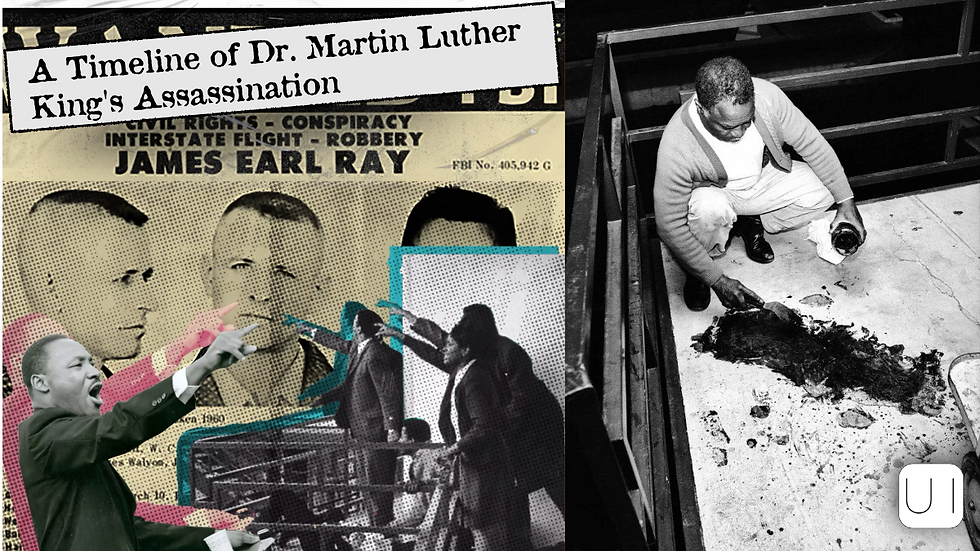
Her death has often been treated as a footnote to her son's, despite happening in the very pulpit where three generations of her family had preached. For more on the assassination that set this chain of tragedy in motion, see our timeline of Dr. Martin Luther King's assassination, or read about the assassination of Malcolm X, another defining act of violence from the same turbulent era of the civil rights movement.
Sources:
1. Wikipedia: Alberta Williams King. https://en.wikipedia.org/wiki/Alberta_Williams_King
2. Atlanta Magazine: The Murder of Alberta King. https://www.atlantamagazine.com/civilrights/the-murder-of-alberta-king/
3. Chenault v. State, Supreme Court of Georgia, 1975. https://law.justia.com/cases/georgia/supreme-court/1975/29662-1.html
4. African American Registry: Marcus W. Chenault Jr. https://aaregistry.org/story/marcus-w-chenault-jr-murderer-born/
5. Essence: The Often Forgotten Assassination of Dr. King's Mother. https://www.essence.com/news/the-often-forgotten-assassination-of-dr-kings-mother/
6. The King Institute, Stanford University: Papers of Martin Luther King Jr.
7. Farris, Christine King. Through It All: Reflections on My Life, My Family, and My Faith. Atria Books, 2009.