

Georgia Tann: The Baby Thief Who Called Herself the Mother of Modern Adoption

Quick answers
Who was Georgia Tann?
The head of the Memphis branch of the Tennessee Children's Home Society, who ran a black market baby trafficking ring behind the front of a legitimate adoption agency from 1924 to 1950, kidnapping and selling an estimated 5,000 children.
How did she get away with it for so long?
Political protection. Memphis boss E.H. "Crump" ran the city for decades, and Shelby County judge Camille Kelley rubber-stamped Tann's adoptions, so almost nobody with power over her had any interest in stopping her.
Did Georgia Tann ever go to prison?
No. Tennessee's governor ordered a criminal investigation in September 1950, but Tann died of uterine cancer just days later, before any charges could be filed against her.
What happened to the children she took?
Most were sold to adoptive families across the country, including several Hollywood stars. An unknown number, estimated at up to 500, died from neglect and disease in her holding facilities.
Today marks 103 years since the first burial in a small, unmarked plot at Elmwood Cemetery in Memphis, reserved for the Tennessee Children's Home Society. A little girl recorded only as Maud went into the ground there on 17 September 1923. Eighteen more children would eventually join her, none of them under their real names, all of them dead under the care of a woman the press once called the Mother of Modern Adoption. Georgia Tann ran the most successful black market baby operation in American history for 26 years, in plain sight, with the government's own courts helping her do it.

From Mississippi to Memphis
Tann was born Beulah George Tann in 1891 in Philadelphia, Mississippi, the daughter of a chancery court judge who reportedly took a personal interest in orphan welfare and may well have been where her own path into child placement started. She trained as a teacher before moving into that work herself, first for the Mississippi Children's Home Society. That job didn't last. She was let go around 1922 to 1924 over what state records later described only as dubious child-placing methods, a warning sign nobody outside Mississippi ever heard about at the time. Tann relocated to Memphis with her close companion, Ann Atwood, who worked alongside her as a housemother and stayed at her side for the rest of Tann's career. Tann talked her way into the executive secretary post at the Shelby County branch of the Tennessee Children's Home Society, and would run it, unlicensed, for the next twenty-six years.
There's a strange footnote sitting underneath all of this. Tann herself adopted a daughter, June Ann, in the early 1920s, around the same time she was starting to build the operation that would eventually treat other people's children as a commodity. Whatever she believed about family, it clearly didn't extend to the thousands of parents on the other side of her business.
Building a machine nobody could touch
What made Tann dangerous wasn't just her own nerve. It was who backed her. Memphis in the 1920s through the 1940s was run almost single-handedly by political boss E.H. "Boss" Crump, and Tann built her operation directly into his machine, cultivating lawyers, doctors and society figures who all had a reason to keep her business running smoothly. Her board attorney, Abe Waldauer, was himself a prominent Crump loyalist, which meant the organisation's own legal oversight was staffed by someone with every incentive to look the other way rather than ask hard questions. The most important ally of all was Camille Kelley, the Shelby County juvenile and family court judge who finalised the great majority of Tann's adoptions. Kelley terminated parental rights in sham hearings, often without the birth parents present or even aware a hearing was happening, and there's evidence she took payments for doing it. With a judge, a prominent attorney and an entire political machine all invested in her success, Tann had almost nobody left who could stop her, and for a long time almost nobody tried. In public, she cut the figure of a respectable, well-dressed Memphis society fixture, the kind of woman invited to charity lunches rather than investigated by them.
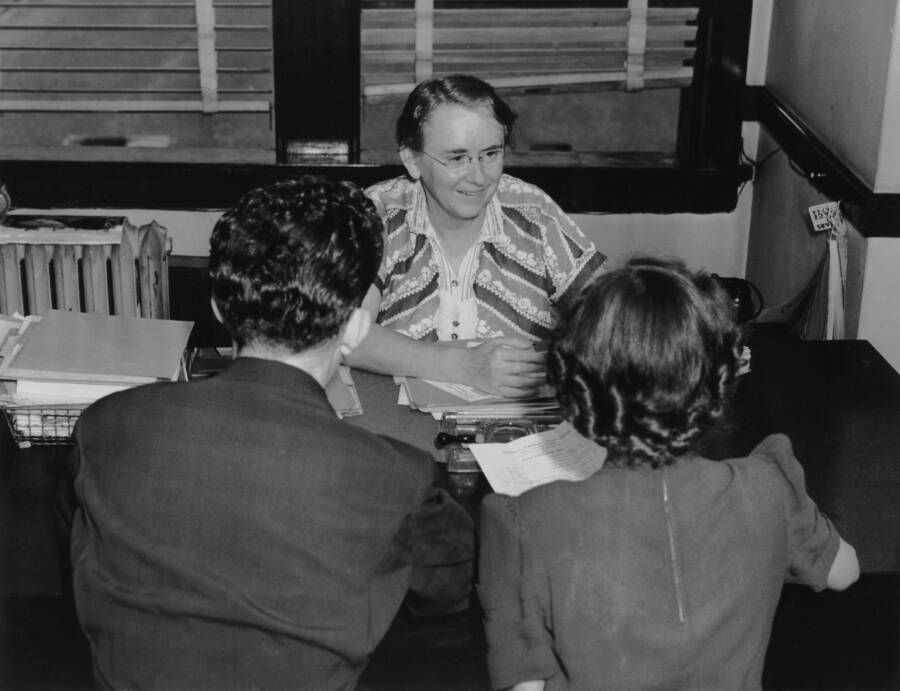
How the children disappeared
Early on, some of Tann's children genuinely were surrendered by desperate parents she'd talked into believing she could offer them a better life, often temporarily, until they were back on their feet. As demand for babies from wealthy, mostly childless clients grew, and the fees she could charge climbed with it, willing surrenders weren't enough to keep up, and her methods got considerably darker.
Tann paid doctors and hospital staff to tell new mothers, often unmarried, poor or simply exhausted after a difficult birth, that their babies had died, then handed the living infant straight to her instead. She had spotters and drivers patrol poor neighbourhoods in nice cars, luring children away from yards, streets, playgrounds and church basements with the offer of a ride or a treat. Older children were sometimes told their parents didn't want them any more. Younger ones were simply gone by the time anyone realised what had actually happened.
The scale of it is easier to grasp through one family's story than through any statistic. In 1943, in rural Tennessee, a woman named Norma Sue and several of her siblings were playing in their own yard when Tann's people took them, all at once. According to Norma Sue's daughter Peggy Koenitzer, who later pieced the story together, the children weren't placed for adoption immediately. They were used as unpaid labour for a period first, before Tann eventually sold Norma Sue and her twin sister on to a couple in Philadelphia. Their siblings scattered into other households entirely, with no guarantee any of them would ever know where the others had ended up.
Selling America's most desirable children
Tann didn't treat the children she'd taken as a charity caseload. She treated them as inventory, grading them by appearance and temperament and pricing accordingly, and built a client list that eventually ran nationwide, reaching well beyond Tennessee into states like New York and California. Tennessee law only allowed her to charge seven dollars for an in-state adoption. Out of state, where almost all her business actually went, she billed clients anywhere from 750 to 10,000 dollars a child, padding the real cost with separate charges for background checks, home visits, plane tickets and paperwork that was frequently forged outright. Publishers Weekly's later description of her clientele put it bluntly: her buyers included "the rich, the famous and the entirely unfit", some of whom returned children they found unsatisfactory as though asking for a refund. Among her documented placements were the twin daughters of actress Joan Crawford, a daughter adopted by June Allyson and her husband Dick Powell, and, according to his own memoir, professional wrestler Ric Flair, whose opening chapter is titled Black Market Baby. She kept roughly 80 to 90 percent of every adoption fee for herself, on top of an annual state grant of around 61,000 dollars that the Society itself received regardless, and by the final decade of her career was personally profiting several hundred thousand dollars a year, worth millions in today's money.
The children who never made it out
The first serious institutional warning came in 1941, when the Child Welfare League of America stripped the Society of its endorsement after discovering Tann was routinely destroying the paperwork tied to her placements. It should have been the moment everything unravelled. Instead, protected by the same political network that had shielded her for years, Tann simply kept operating unlicensed for another nine years, and the warning barely registered outside Tennessee's own welfare circles.
Conditions in her holding facilities were badly overcrowded and poorly supervised, and disease moved through them fast, sometimes with dozens of children falling sick within months. One Memphis Commercial Appeal headline from the scandal's final weeks read plainly, "40 to 50 Babies Died at Children's Home, Medical Leader Says". Doctors reportedly warned Tann directly to stop bringing in new infants during outbreaks. She kept doing it anyway. During her years running the Society, Memphis and Shelby County recorded the highest infant mortality rate anywhere in the country, a statistic state investigators later tied directly back to her operation. Estimates of the total death toll under her care range as high as 500, though only nineteen of those children were ever formally accounted for. Part of the reason the real number can't be known is that Tann is reported to have avoided the city's dedicated cemetery for wards of the state whenever she could, having some children's remains buried behind the boarding house instead, or cremated, specifically so their deaths never had to be reported at all. The nineteen who were accounted for were buried under invented names, Baby Estelle, Baby Billy, Baby Herbert among them, in the small unmarked Elmwood Cemetery plot Tann herself had purchased before 1923. A memorial finally erected there reads, in part, that it honours "the 19 children who finally rest here unmarked if not unknown", and the hundreds more who died under what it calls the cold, hard hand of the Society.
One mother's twenty-year search
Not every family Tann tore apart stayed apart forever. In the spring of 1946, a Memphis woman named Alma Sipple brought her sick daughter Irma to hospital after Tann offered to arrange free medical care. Days later, Tann told Sipple the little girl had died of pneumonia and had already been buried. Sipple never fully believed it, but had no way to prove otherwise and no one willing to help her look. More than forty years passed before, in 1989, she happened to be watching a television programme profiling unsolved cases and recognised Tann's face from the story being told on screen. She contacted Tennessee's Right to Know, a volunteer group that had formed specifically to reunite families separated by the Society, and within a relatively short time, they found Irma alive.

The empire cracks
Tann's protection finally failed her because of politics rather than child welfare. Gordon Browning became governor in 1949 as the first Tennessee governor in decades not beholden to the Crump machine, and an investigation into Tann's operation offered him a direct way to damage his rivals as well as address the rumours that had circulated about her for years. On 11 September 1950, his administration announced a criminal investigation into the Society. What it found in short order included secret bank accounts, years of destroyed paperwork, and adoption fees that had made Tann roughly half a million dollars richer over just the previous decade alone, worth something like five to ten million dollars today. Newspapers that had spent decades treating Tann as a civic asset suddenly couldn't print enough about her. The Memphis Press-Scimitar ran a piece accusing her of pocketing half a million dollars outright, and the Commercial Appeal's own coverage turned openly damning within days.

Dying before the charges came
Georgia Tann died of uterine cancer on 15 September 1950, four days after the investigation was announced and, by some accounts, only three days before the state was ready to file formal charges against her. She had known about the cancer for some time. Whether she simply outlived the paperwork or the timing was less accidental than it looked is something no one has ever conclusively settled. Camille Kelley resigned from the bench under pressure but was never prosecuted, and died in 1955 without ever answering publicly for her role. No one connected to the Tennessee Children's Home Society ever served a day for what the state's own investigators had found.
A cover-up dressed as reform
Tennessee did respond to the scandal, just not in the way most of Tann's victims would have wanted. The state passed new adoption laws in 1951 that sealed birth and adoption records to protect the privacy of everyone involved. In principle, reasonable. In practice, it meant that thousands of people taken by Tann, along with the birth parents she'd lied to, now had no legal way to find each other even if they wanted to, and the scandal that had produced them quietly stopped being a subject anyone official wanted to revisit. For the next four decades, most of the country simply forgot Georgia Tann's name.
Cracking it back open
It took a national television audience to change that. In 1991, 60 Minutes ran a segment on the scandal that reignited public interest almost overnight, and the volunteer reunion group Tennessee's Right to Know, along with journalist Barbara Bisantz Raymond's later book The Baby Thief, gave adoptees and birth families still searching for each other a real route back to one another for the first time in their lives. Author Lisa Wingate's 2017 novel Before We Were Yours, based directly on Tann's crimes, went on to sell millions of copies and introduced an entirely new generation to a story Tennessee's own adoption law had spent forty years quietly filing away. More recently, ordinary consumer DNA testing has done what sealed paperwork never could, letting adoptees and siblings find each other without needing anyone's permission or any court's cooperation at all, sometimes decades after Tennessee's own records still refuse to tell them the truth.
Tann's name still gets invoked, usually as a warning, whenever a state-run institution turns child welfare into a numbers game. It sits alongside other stories on the site about children treated as a resource to be moved rather than people to be protected, from the Nazi-run Lebensborn programme to America's own earlier, messier experiment in shipping unwanted children across the country on the orphan trains.
Frequently asked questions
Did any of Georgia Tann's victims ever find their birth families?
Yes, many did, particularly from the 1990s onward, with help from volunteer reunion groups and, more recently, consumer DNA testing, though Tennessee's sealed records made the search far harder and slower than it should have been.
Was Georgia Tann ever formally charged with anything?
No. She died four days after the state announced its investigation and before any charges were filed, so she was never formally accused of a crime in a court of law.
Why did Georgia Tann's methods become the template for adoption practices?
Her preference for closed, sealed adoptions with no contact between birth and adoptive families became the American norm for decades, ironically because it was originally useful for hiding exactly how she'd obtained the children in the first place.
How many children total went through the Tennessee Children's Home Society under Tann?
Historians generally put the figure at around 5,000 children trafficked between 1924 and 1950, though incomplete and deliberately destroyed records mean the true number can't be known for certain.
How much did adopting a child from Georgia Tann actually cost?
Tennessee law capped in-state fees at seven dollars, but Tann charged out-of-state clients anywhere from 750 to 10,000 dollars a child, disguising the real price as separate charges for background checks, travel and paperwork.

Sources
● Elmwood Cemetery: The Tennessee Children's Home Society Lot at Elmwood
● Tennessee State Library and Archives: Georgia Tann/Tennessee Children's Home Society Investigation Scrapbooks, 1950
● NPR (WBUR On Point): Orphan Victims of a Black-Market Baby Business Share Their Stories
● Find a Grave: Georgia Tann (1891-1950)
● Nashville Ghosts: The Story of Georgia Tann, The Baby Thief
● Heart Starts Pounding: America's Most Notorious Baby Thief: Georgia Tann
● AbeBooks (Publishers Weekly review): The Baby Thief: The Untold Story of Georgia Tann, the Baby Seller Who Corrupted Adoption, by Barbara Bisantz Raymond
● Tennessee Historical Society: Before We Were Yours by Lisa Wingate and Before and After by Lisa Wingate and Judy Christie
● Shortform (Stuff You Should Know podcast summary): The Awful Crimes of Georgia Tann
● Criminal Element (Philip Jett): Georgia Tann: The Matron of Evil


