Le Nu Esthétique: The French Magazine That Helped Invent Artistic Nude Photography
- 3 hours ago
- 6 min read

In October 1902, a Parisian publisher named Émile Bayard launched what is generally considered the world's first nude photography magazine. He called it Le Nu esthétique: L'Homme, la Femme, L'Enfant, which translates roughly as The Aesthetic Nude: Man, Woman, Child. It was sold by subscription only, published in monthly fascicles, and dedicated to William-Adolphe Bouguereau, the most celebrated academic painter in France. The preface was written by Jean-Léon Gérôme, Bouguereau's peer and rival for the title of the era's definitive painter of the classical nude.
That combination of names tells you exactly what Bayard was trying to do. He wasn't publishing pornography. He was making an argument that the nude human body, photographed in poses drawn from centuries of western art, was a legitimate subject for a periodical. He backed that argument with two of the most prestigious names in French academic painting and sold the results to subscribers who received their copies discreetly through the post.

The Academic Tradition It Was Built On
To understand what Le Nu esthétique was doing, you need some sense of what Bouguereau and Gérôme represented in 1902. Both men were titans of the French academic painting tradition, the system of art education and exhibition centred on the École des Beaux-Arts and the official Salon that had defined what serious French painting looked like for most of the 19th century. Bouguereau had produced 822 known finished paintings over a 50-year career, many of them mythological scenes featuring female nudes of extraordinary technical refinement. He had won the Prix de Rome, been elected to the Académie des Beaux-Arts, and was so dominant at the Salon that Cézanne once expressed frustration at being rejected by what he called the "Salon de Monsieur Bouguereau."
Gérôme was equally distinguished, known for his Orientalist paintings and his precise, almost photographic approach to detail. He had also moved from painting into sculpture and had a genuine interest in the relationship between photography and the fine arts, which made him a logical choice to write the preface to a publication explicitly trying to bring photographic technique into dialogue with the academic figure tradition.

By 1902, both men were near the end of their careers and their tradition was under pressure from the Impressionists and the various avant-garde movements that would come to define the early 20th century. Bouguereau died in 1905, three years into the magazine's run. Gérôme died in 1904. The dedication of Le Nu esthétique to Bouguereau reads, in hindsight, like a farewell salute to a particular idea of what beauty was supposed to look like.
What the Magazine Actually Contained
Over five years, Bayard published 25 separate fascicles, each containing multiple collotype plates of nude photographs. Complete sets held in rare book collections suggest each issue ran to around four full-page plates, with most plates containing multiple photographs rather than a single image. The total number of photographs across the full run runs into the hundreds.
The photographs were shot in studio conditions, with models posed against plain or lightly dressed backdrops in attitudes drawn directly from classical art. The poses referenced the Greeks and Romans, and the more recent academic tradition of Bouguereau and Gérôme. There were draped figures and undraped ones, single models and groups, men and women. Props were used: cloth, urns, natural branches. Some images employed basic photographic special effects, double exposures or soft filters, to enhance the painterly quality of the result.
The photographers credited for the work were Forestier and Bayard himself. Their approach aligned closely with the Pictorialist movement that was reshaping art photography in Europe and America at the same time, the same tradition behind the work of photographers like Arthur Kales in Los Angeles. Pictorialism treated photography as a fine art rather than a documentary medium, using lighting, pose, and darkroom technique to produce images that could be exhibited and collected alongside paintings and prints.
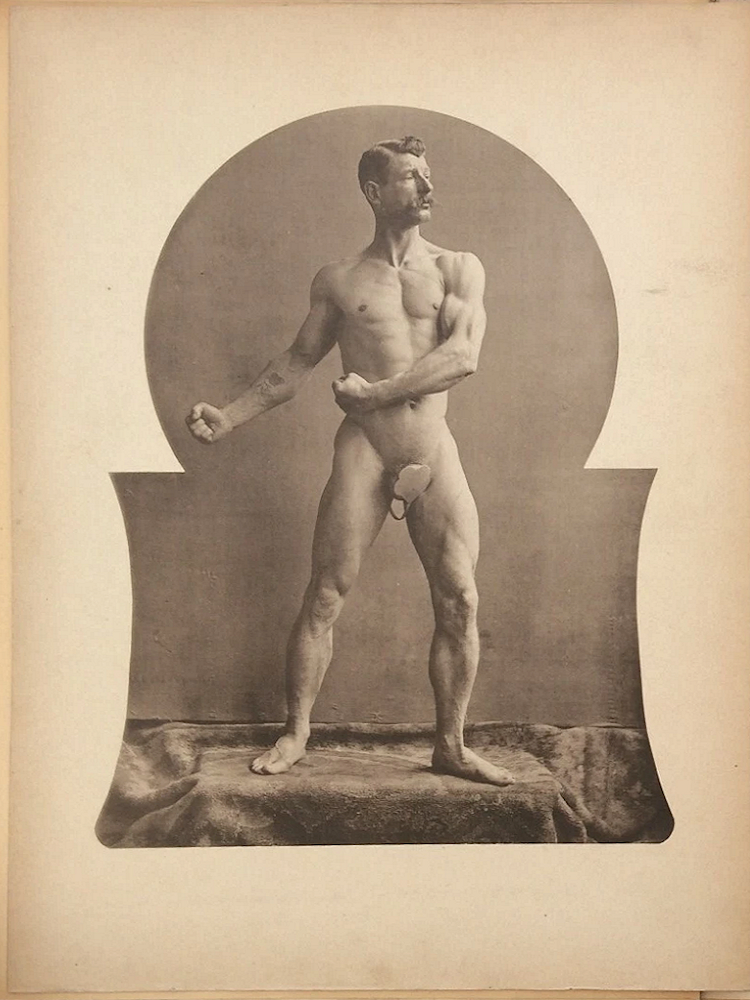
The physical object was carefully produced. Issues came in illustrated card wrappers, the first cover bearing a printed dedication to Bouguereau. The format was folio-sized, around 37 by 27 centimetres, designed to be kept and consulted rather than read and discarded. Surviving complete sets are now extremely rare and command significant prices at specialist auction.
The Problem of Competitors
Almost immediately after Le Nu esthétique launched, imitators appeared. This was predictable. A subscription publication containing photographs of nude bodies, however artistic its framing, was also commercially attractive to publishers with no particular interest in the academic nude tradition. The imitators were, in Bayard's view, transparently erotic rather than aesthetic, and their existence created a problem he hadn't anticipated.

The nude photography market in France was already well established by 1902. As we've covered in our piece on vintage French nude photography of the 1920s, and in the earlier work documented in our article on le stéréo nu and boudoir photography in Belle Époque Paris, there was a substantial trade in nude photographs as postcards, prints, and stereoviews throughout the late 19th and early 20th centuries. Most of that material existed in a grey zone, tolerated by authorities but not quite respectable. Bayard's project was an explicit attempt to separate his work from that tradition by anchoring it to the highest prestige names in academic art.
When cheaper imitators used the same format and the same subscription model but dropped any pretence of artistic intent, Bayard found himself lumped in with publications he considered beneath contempt. The moral crusaders who launched legal attacks against the nude magazine market in this period did not draw the distinction between Bayard's Bouguereau-dedicated fascicles and the more obviously titillating material his imitators were producing.
Closure and Legacy
Bayard shut Le Nu esthétique down in 1907, after five years and 25 issues. The reasons he gave were the insult of being compared to his inferior competitors and the harassment of the legal campaigns launched against the category as a whole. Whether the publication was also losing subscribers or simply becoming harder to defend legally isn't entirely clear from the surviving record. What's clear is that he chose to close it on his own terms rather than wait to be forced out.
The magazine's legacy is genuinely significant. It established that a serious, commercially distributed, subscription-based publication could treat nude photography as a fine art subject with the backing of the most respected painters of the era. That's a different claim from the one being made by the postcard sellers and stereoview publishers who operated in the same market. It didn't win the argument in 1907, but it laid groundwork that later publications would build on.


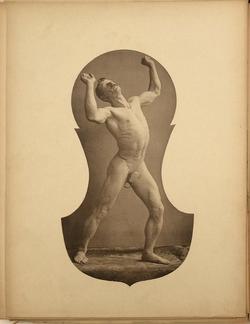


The Bibliothèque nationale de France holds complete or near-complete sets and has digitised much of the run through Gallica, making the images freely accessible for the first time to anyone with an internet connection. What you find there is exactly what Bayard claimed to be producing: carefully posed, technically accomplished photographs of nude human bodies in the tradition of western academic art, shot with genuine attention to composition and light.
Looked at now, the images do what Bayard said they would. They recall the poses of Greek and Roman sculpture, the reclining figures of Renaissance painting, the mythological scenes of Bouguereau. They sit in the same lineage as the work being done slightly later by photographers like Alfred Cheney Johnston in New York and Studio Manassé in Vienna: photographers who understood that the nude figure in front of a camera was not automatically erotic, and that how it was framed, lit, and posed determined what kind of image it actually was. Bayard was making that argument in print in 1902, and the archives prove he was right.
Read More on Utterly Interesting
Sources