

Project X-Ray: The Dentist, the Bats, and the Bomb That Burned Down America's Own Base

On the afternoon of December 7, 1941, a 60-year-old dentist from Irwin, Pennsylvania, pulled his car over to the side of a New Mexico road and had an idea that would eventually burn a US Army airfield to the ground, impress the President of the United States, outrage more than one military general, and very nearly change the course of the Second World War.
The dentist's name was Dr. Lytle S. Adams. He'd spent part of his vacation exploring Carlsbad Caverns, watching in amazement as millions of Mexican free-tailed bats poured out of the cave mouth at dusk like a living black cloud. Then the news came over the car radio. Japan had attacked Pearl Harbor.

By the time he got back on the road, Adams had the outline of a weapons system in his head.
A Very Unusual Letter to the White House
Adams wasn't a military man. He ran a small aircraft parts factory and held a handful of patents on inventions unrelated to warfare, including a system for aircraft to collect mail bags without landing, a contraption he'd demonstrated to First Lady Eleanor Roosevelt herself, taking her on a test flight in the late 1920s. That personal connection to Eleanor would prove crucial.
In January 1942, less than six weeks after Pearl Harbor, Adams sent his proposal to the White House. He'd done his homework. He knew that Japanese cities were predominantly built of wood, paper, and bamboo. He knew bats could carry loads heavier than their own body weight. He knew they roosted before dawn, tucking themselves into the eaves and attics of buildings. And he knew that millions of them were sitting in a cave in New Mexico, apparently waiting for a purpose.
His letter was extraordinary even by wartime standards. In it, Adams declared the bat to be the "lowest form of animal life" and that, until now, "reasons for its creation have remained unexplained." He went on to assert that bats were created "by God to await this hour to play their part in the scheme of free human existence, and to frustrate any attempt of those who dare desecrate our way of life."

Eleanor Roosevelt passed the letter to her husband. President Franklin D. Roosevelt forwarded it to Colonel William "Wild Bill" Donovan, director of wartime intelligence, along with a note of his own. It read: "This man is not a nut. It sounds like a perfectly wild idea but is worth looking into."
Donovan ran the Office of Strategic Services, the wartime intelligence agency better known as the OSS, a body whose entire remit was finding unconventional ways to win the war. Dreaming up wild ideas was essentially the job description. He passed Adams's proposal to the National Defense Research Committee, which consulted experts at Harvard, MIT, and the University of Southern California. Nearly all of them agreed it had a genuine chance of working. The plan was marked Top Secret and given a code name. Initially it was known simply as the Adams Plan. Later, after the Navy took control, it became Project X-Ray.
The Most Unlikely Team in Military History
Adams assembled a team that read like the cast of a film nobody would ever greenlight. There was Dr. Jack von Bloeker, a mammalogist from the Los Angeles County Museum. There was Tim Holt, a 24-year-old actor turned Air Force lieutenant who'd starred in Westerns for RKO and whom Orson Welles would later call "one of the most interesting actors that's ever been in American movies." Holt had filmed six Westerns in quick succession before being shipped out, and his enlistment had been delayed just long enough for him to appear in a propaganda film called Hitler's Children.

Alongside them were the Herrold brothers, one a former hotel manager and the other a bodybuilder; Patricio "Patsy" Batista, an ex-gangster who claimed to have worked for Al Capone; a lobster fisherman turned Marine; and two high school lab assistants named Jack Couffer and Harry Fletcher, who had come from von Bloeker's laboratory. Adams, aware of the prestige attached to military rank, promptly promoted most of them to "acting" non-commissioned officer status, entirely on his own authority.
The Harvard zoologist Donald Griffin, who would later become famous as the discoverer of echolocation in bats, was also brought on board. Griffin called the plan "bizarre and visionary" but said that, if done correctly, it was "likely to cause severe damage to property and morale."
Their first task was finding the right bat. The team spent months travelling across the American Southwest, visiting over a thousand caves and three thousand mines, often driving through the night. They eventually settled on the Mexican free-tailed bat: small, fast, plentiful in the tens of millions across Texas and New Mexico, and capable of carrying a load heavier than its own body weight. One of the larger confirmed populations roosted directly in Carlsbad Caverns, the very place that had given Adams his idea.
The Napalm Dentist and His Tiny Bombs
The next problem was the incendiary device itself. The smallest bomb available at the time weighed around two pounds. A bat weighs half an ounce. Something dramatically smaller was needed, and it had to be something that didn't react with oxygen the moment it was exposed to air, otherwise the bats couldn't breathe.
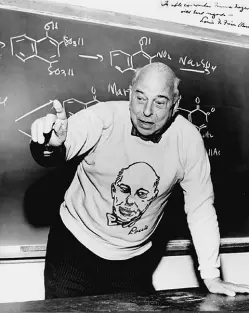
The original plan was to arm the bats with white phosphorus. That idea was quietly dropped when Dr. Louis Fieser joined the project. Fieser was one of America's most distinguished chemists. He'd helped develop synthetic vitamin K and cortisone, and more relevantly to the war effort, he'd just invented something called napalm in a covert laboratory at Harvard University. Fieser happened to be the former Harvard roommate of Donald Griffin, which is how he ended up gluing incendiary devices to bats in New Mexico. The same napalm formula would later gain a very different kind of notoriety during the Vietnam War.
Fieser designed a cellulose capsule roughly the size of a finger joint, filled with napalm gel and fitted with a 30-minute time delay fuse. He called it the H-2 unit. It weighed between 15 and 18 grams, which was within the carrying capacity of a 14-gram bat. After experimenting with surgical clips, strings, and various other attachment methods, the team settled on the most straightforward option: gluing the device directly to the bat's chest with adhesive.
It wasn't entirely unlike what the British were doing on the other side of the war, where researchers had developed their own animal-based sabotage devices, including explosive rats designed to be planted near enemy boilers. The difference was that the British rats were dead and stuffed. Adams's bats would be very much alive.
The delivery system was a five-foot metal casing fitted with 26 stacked circular trays, each designed like an egg carton, holding compartments for 40 bats apiece. The total payload was 1,040 armed bats per canister. The bats would be cooled into hibernation using refrigerated ice cube trays, which kept them docile and meant they didn't need to be fed during transportation. The plan was to drop the canisters from high altitude. At 4,000 feet a parachute would deploy. At 1,000 feet the casing would open, releasing the bats into warming air. Awakening as they fell, they'd disperse and seek out eaves, attics, and roof spaces, carrying their H-2 units with them. Thirty minutes later, fires would start in places firefighters couldn't easily reach, all across the city.

The vision was extraordinarily ambitious. Military planners calculated that ten B-24 bombers flying from Alaska, each carrying a hundred canisters, could release over a million armed bats above the industrial cities of Osaka Bay in a single mission.
The Accident That Proved the Idea Worked
Testing began in earnest in 1943. The early attempts were a comedy of logistical errors. In one early test, bats that hadn't properly hibernated simply dropped straight to the ground like stones when released from altitude. Others woke too early and flew off in the wrong direction entirely.
Then came May 15, 1943, and the incident that managed to be simultaneously the project's greatest failure and its most persuasive proof of concept.
The test was taking place at the Carlsbad Army Air Corps Base in Carlsbad, New Mexico, a brand new facility built for flight training. A B-25 bomber dropped a canister. The parachute deployed as intended, the casing opened, and the bats flew free. Then an unexpectedly strong wind carried them further than anticipated. With no bats to photograph, Signal Corps photographers asked if the team could stage some additional footage using bats with live incendiary devices rather than dummies.

In the New Mexico heat, the supposedly hibernating bats woke up before they were supposed to. Armed with live H-2 units and suddenly very alert, they scattered across the base. Several of the armed bats found their way into the air traffic control tower. Others roosted under a fuel tank. A few settled in the newly completed barracks.
When the timers ran down, the base caught fire. Firefighting resources weren't activated in order to protect the project's secrecy. The Carlsbad Army Air Corps Base, pristine and newly built, burned to the ground. There were no reported deaths or serious injuries, but the base commander was not amused. Adams, characteristically, was unperturbed. "In a way," he noted afterwards, "this accident proved the bat bomb would work. Look what six bats could do."
From the Army to the Navy to the Marines
The Army, having watched its own base disappear in a napalm-assisted fire, handed the project over to the Navy in August 1943. The Navy renamed it Project X-Ray and passed it to the Marine Corps that December, partly because the Marines were most heavily involved in the Pacific theatre and understood Japan's vulnerability to fire. Operations moved to the Marine Corps Air Station at El Centro in California.
Adams himself was gradually squeezed out of the project he'd created. His eccentricities, which had been charming when he was just a dentist with a wild idea, became liabilities once the military took over. He skipped appointments with senior officials without notice, chased half-formed ideas across Southern California without warning anyone, and at one point proposed a live test involving ten thousand armed bats over the Southern California desert, prompting Lieutenant Tim Holt to reportedly threaten to stand in front of the test range with a machine gun to prevent it.
The Marines pressed on without him. Tests at the Dugway Proving Ground in Utah, where the Chemical Warfare Service had built a full-scale replica of a Japanese residential district, went better than anyone had expected. Bats successfully penetrated the mock buildings and placed incendiary devices in inaccessible locations. The results impressed everyone who saw them.
The chief of incendiary testing at Dugway wrote in his assessment that "a reasonable number of destructive fires can be started in spite of the extremely small size of the units," and noted that the key advantage was that the fires would establish themselves inside buildings before anyone discovered them. The National Defense Research Committee observer was more blunt: "It was concluded that X-Ray is an effective weapon."

The chief chemist's report put it in numbers. Standard incendiary bombs produced between 167 and 400 fires per bomb load. Bat bombs, by the same weight, would produce between 3,625 and 4,748 fires. That was a roughly 12-fold increase in destructive power, delivered against targets where conventional bombs would struggle to start fires at all.
The End of the Bats
In 1944, with further tests scheduled for mid-year and the Marines confident they could have the bat bomb combat-ready by mid-1945, Fleet Admiral Ernest J. King pulled the plug. His reasoning was simple: the project was moving too slowly, and another race was already being won by a much larger and better-funded team.
The Manhattan Project was closing in on a functional atomic bomb. Against that, a plan involving a million bats, refrigerated trucks, glued incendiary capsules, and carefully timed dawn drops over Japanese cities seemed both too slow and too uncertain. By the time Project X-Ray was officially cancelled, the US had spent approximately $2 million on it, equivalent to around $35 million today. Over 6,000 bats had participated in testing. Some had never woken from hibernation. Others had flown into the desert and were never found.
The same drive to weaponise wartime science that had given the world napalm, the atomic bomb, and Operation Paperclip (the postwar recruitment of Nazi scientists into American research programmes) had simply found a faster horse to back.
OSS research director Stanley P. Lovell, who had originally been tasked with reviewing Adams's idea, gave the whole affair a dry final verdict. He referred to it publicly as "Die Fledermaus Farce."
Adams spent the rest of his life insisting he'd been right. "Think of thousands of fires breaking out simultaneously over a circle of forty miles in diameter for every bomb dropped," he said after the war. "Japan could have been devastated, yet with small loss of lives." Whether he had a point is something historians still argue about. The Dugway tests suggested the weapon was genuinely effective. Whether it could have delivered what Adams promised at operational scale, against a defended target, with all the logistical complexity of getting a million hibernating bats to the right altitude at the right temperature at the right time of morning, is a rather different question.
Tim Holt went back to making Westerns, though he found time to appear opposite Humphrey Bogart in The Treasure of the Sierra Madre. Louis Fieser continued his chemistry career, a career that would later include significant controversy over his development of napalm and its use in Vietnam. Donald Griffin spent decades advancing the science of echolocation. And the Mexican free-tailed bats of Carlsbad Caverns continued to pour out of the cave every evening at dusk, entirely unaware that a dentist had once looked at them and seen an air force.
Sources
1. Couffer, Jack. Bat Bomb: World War II's Other Secret Weapon. University of Texas Press, 1992.
2. Wikipedia. Bat bomb.
3. Skovlund, Joshua. "That time the US military burned down one of its own bases with a 'bat bomb'," Task & Purpose, December 2024.
4. Duffin, Allan T. "'Bat Bombs': WWII's Project X-Ray," Warfare History Network.
5. Madrigal, Alexis C. "Old, Weird Tech: The Bat Bombs of World War II," The Atlantic, April 2011.
6. Glines, Carroll V. "The Bat Bombers," Air Force Magazine, October 1990.
9. Lisle, John. The Dirty Tricks Department: Stanley Lovell, the OSS, and the Masterminds of World War II Secret Warfare. St. Martin's Publishing Group, 2023.
10. Christen, A.G.; Christen, J.A. "Lytle S. Adams, DDS (1883-1970): Nonstop Airmail Pick-up inventor," Journal of the History of Dentistry, 2005.


