


The Party Has Just Begun: The Bank Robbery That Gave the World Stockholm Syndrome
Updated: Oct 6

On the morning of August 23, 1973, a man walked into a busy Stockholm bank, pulled a submachine gun from under a folded jacket, fired at the ceiling, and announced in English: "The party has just begun!" By the time it was all over, six days later, the world had a new word in its vocabulary, and one of the women locked in a bank vault had broken off her engagement, turned on the Swedish prime minister, and told a psychiatrist she trusted her captor more than she trusted the government. The story of the Norrmalmstorg robbery is stranger than any fiction, and the syndrome it gave the world turns out to be a lot more complicated than most people think.

A Safe-Cracker on Furlough
Jan-Erik Olsson was a 32-year-old safe-cracker from Helsingborg serving a three-year sentence for grand larceny. He'd been granted a prison furlough, the kind designed to help convicts ease back into civilian life, but instead of returning as required, he put on a wig and sunglasses, headed to the Sveriges Kreditbanken on Norrmalmstorg Square in the heart of Stockholm, and let chaos loose. He'd met the career criminal Clark Olofsson while both were at Kalmar correctional facility, and Olsson had been fascinated by the man's reputation. In the months before the robbery, he'd even tried to break Olofsson out of prison using smuggled dynamite, though the plan went nowhere when the explosives failed to detonate. What Olsson pulled off at the bank on that August morning was something far more audacious.
He wounded a police officer who responded to a silent alarm, then took four bank employees hostage: Birgitta Lundblad, Elisabeth Oldgren, Kristin Enmark, and Sven Safstrom. His demands were direct: over $700,000 in Swedish and foreign currency, a getaway car, and the release and delivery of Clark Olofsson. Within hours, Swedish authorities had agreed, producing the money, a blue Ford Mustang with a full tank, and Olofsson himself, freshly transported from Norrköping Prison. He'd been in solitary confinement when the call came in. He was reportedly happy to help.
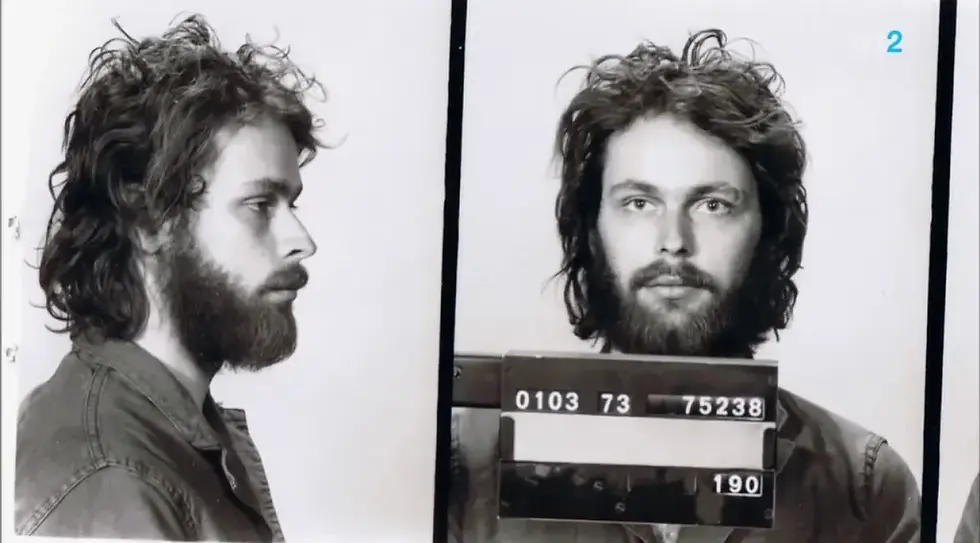
What the Swedish government would not allow was for Olsson to leave with the hostages as human shields. That single refusal turned a bank robbery into a six-day siege that the entire country watched play out on live television, the first major crime in Sweden to receive that treatment. The nation was gripped. It would not be the last time a dramatic hostage situation captivated an entire country.
Playing Checkers in the Dark
The four hostages were moved into the main vault of the bank, a cramped and airless space that would be their world for almost six days. What happened inside that vault defied every expectation. Olsson draped a wool jacket over Kristin Enmark's shoulders when she shivered. He soothed her after a bad dream and gave her a bullet from his gun as a keepsake. When Birgitta Lundblad couldn't reach her family by phone, he told her gently, "Try again, don't give up." When Elisabeth Oldgren complained of claustrophobia, he tied a thirty-foot rope around her waist and let her walk outside the vault. She later told The New Yorker that, though leashed, she remembered thinking "he was very kind to allow me to leave the vault."
The hostages told stories and played checkers. Olofsson, who had a presence that made Enmark describe him as a cross between Che Guevara and Jesus, walked around the vault singing Roberta Flack's "Killing Me Softly." By the second day, all four hostages were on first-name terms with their captors. The man they called Janne had scared them badly at the start. He knew it. "You could see the fear in their eyes," he said later. But fear gave way to something stranger and more human.
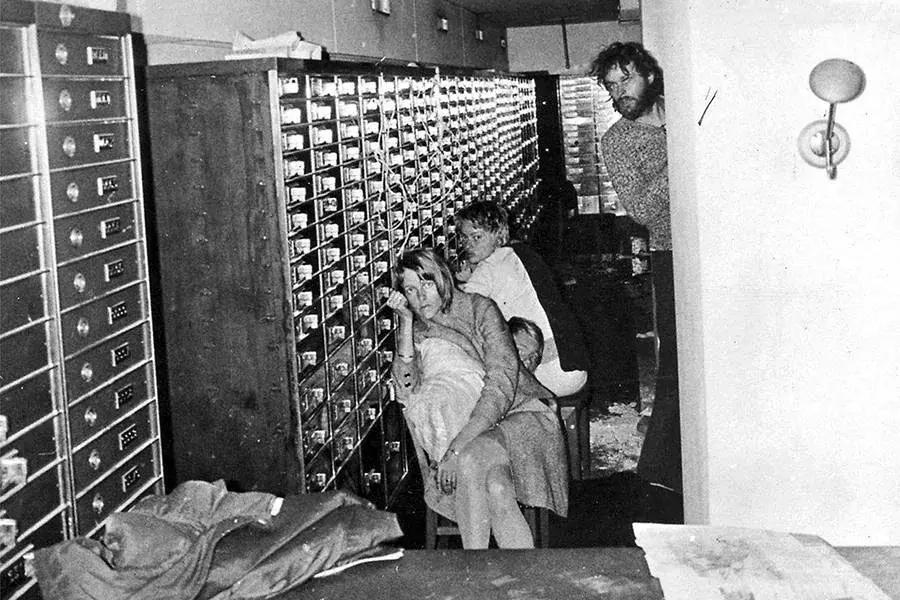
When the police commissioner was allowed inside to assess the hostages' welfare, he found them hostile toward him and relaxed with the gunmen. The lone male hostage, Sven Safstrom, was warned by Olsson that he might need to shoot him in the leg to put pressure on the police. Safstrom's response, recalled later, became one of the incident's most quoted moments: "How kind I thought he was for saying it was just my leg he would shoot." Enmark tried to persuade her fellow hostage to take the bullet. "But Sven," she reasoned, "it's just in the leg."
Taking on the Prime Minister
On the third day, Enmark was put through to Olof Palme, who was simultaneously managing a national election campaign and a deathbed vigil for the country's beloved ninety-year-old King Gustaf VI Adolf. She didn't let him off lightly. "I fully trust Clark and the robber," she told the prime minister. "I am not desperate. They haven't done a thing to us. On the contrary, they have been very nice. But you know, Olof, what I am scared of is that the police will attack and cause us to die." She asked him to let the robbers take her out of the bank in the getaway car. Palme refused. He told her the government wouldn't negotiate with criminals, and that she might have to accept dying at her post. She was furious. She didn't forget it.
In another call, she told Swedish radio: "I'm not the least bit afraid of Clark and the other guy, I'm afraid of the police. Believe it or not, but we've had a really nice time here." A nation stared at its television sets, baffled. The public flooded police headquarters with suggestions ranging from sending a Salvation Army band to play religious music outside to releasing a swarm of bees into the bank to sting the perpetrators into submission. The Swedish government, which had placed far less faith in its hostages' ability to assess their own situation than the hostages themselves had, held firm.

Teargas and a Final Embrace
On the night of August 28, after more than 130 hours, police pumped teargas through a hole drilled in the ceiling of the vault. Olsson and Olofsson surrendered quickly. But when the police called for the hostages to come out first, all four refused. Enmark shouted: "No, Jan and Clark go first. You'll gun them down if we do!" As the captors were led away and the hostages were escorted out, the scene in the vault doorway was remarkable. Embraces, handshakes, kisses. Two of the female hostages called out to the police: "Don't hurt them. They didn't harm us." Enmark, being wheeled away on a stretcher, shouted to the handcuffed Olofsson: "Clark, I will see you again."
Police investigated whether Enmark had been involved in planning the robbery with Olofsson. She hadn't. The day after her release, Oldgren asked a psychiatrist: "Is there something wrong with me? Why don't I hate them?"
A Syndrome Named Without a Single Conversation
Nils Bejerot was a Swedish criminologist and psychiatrist who'd been called in by the Stockholm police to help analyse the situation. He never met any of the hostages. He never spoke to them, corresponded with them, or interviewed them. What he did do was appear on a Swedish news broadcast after the hostages' release and announce that they had been brainwashed by their captors. He named the phenomenon Norrmalmstorgssyndromet, and it soon became known internationally as Stockholm Syndrome. American psychiatrist Frank Ochberg later refined the concept in 1980 in the context of the Iranian hostage crisis, framing it as a survival mechanism rooted in transference.

The problem, as Kristin Enmark has spent decades pointing out, is that Bejerot got it wrong and she wasn't consulted. In her book I Became the Stockholm Syndrome, she wrote that she had acted rationally throughout. She'd been trapped between two threats: an armed man who'd already shot a police officer on one side, and a police force that Bejerot himself had helped direct in ways that put the hostages at greater risk. Police superintendent Eric Ronnegard later admitted in a published account that the police themselves had represented a genuine threat to the hostages. "There was no love or physical attraction from my side," Enmark told Swedish newspaper Aftonbladet in 2015. "He was my chance for survival and he protected me from Janne. I was a 23-year-old woman who survived six terrifying days in a bank vault."
The diagnosis was widely viewed as a way to dismiss and pathologise the responses of women who had made clear, rational calculations about their own survival. Gender studies professor Cecilia Ase at Stockholm University said the statements made by Enmark and the other women during the siege had been interpreted by the authorities "in a very sexualised dimension, as if they had fallen under the spell of a syndrome," as though they'd lost all agency. Australian journalist Jess Hill, writing in her 2019 book See What You Made Me Do, described Stockholm Syndrome as a "dubious pathology with no diagnostic criteria" that was "riddled with misogyny and founded on a lie." Stockholm Syndrome has never been included in the Diagnostic and Statistical Manual of Mental Disorders, and a 2008 literature review found that most diagnoses of the syndrome were being made by the media rather than by psychiatrists or psychologists. It's a pattern that will be familiar to anyone who's looked at how the term has since been applied to cases like the kidnapping of Colleen Stan, or the case of Jan Broberg, where the concept is routinely invoked to explain why victims didn't simply run.

What Happened to Everyone After
The hostages visited Olsson and Olofsson in prison. At trial, Enmark even lied in court, testifying that she'd never seen Olofsson hold a gun during the six days. She didn't believe he deserved punishment for his involvement. Olofsson, who argued he'd gone to the bank to protect the hostages and keep the situation calm, was ultimately acquitted on appeal and served only the remainder of his original sentence.
Olofsson, upon release in 1983, left Sweden with his wife and settled in Belgium. He'd used his prison time to study journalism at Stockholm University. His criminal career didn't end in the bank vault: he was convicted of drug smuggling in Belgium in 1999, changed his name to Daniel Demuynck, and moved to the Belgian countryside. In 2022, Netflix produced a six-episode drama series called Clark, starring Bill Skarsgård, that told his story, controversially in the eyes of many who felt it glamorised him. Enmark and Olofsson's families stayed close over the years. The two did eventually have a love affair, but years after the siege, not inside the vault as was widely rumoured at the time.
Jan-Erik Olsson was sentenced to ten years in prison. In the letters that poured in from admiring women while he was incarcerated, he found his wife. He married her, moved to northeastern Thailand in 1996, and ran a supermarket there with his family for fifteen years. He returned to Sweden in 2013 and ran a car repair shop in Helsingborg until retirement. In 2009, he published his autobiography. He called it Stockholm Syndrome. He told one journalist he wasn't sure the syndrome existed at all. "What the heck is a syndrome anyway?" he said. "I don't know."

The robbery also became famous in popular culture well beyond Sweden. In 1975, Sidney Lumet's film Dog Day Afternoon, with Al Pacino, fictionalised a Brooklyn bank robbery in which hostages bonded with their captors, drawing directly on the same dynamic. The Norrmalmstorg robbery was also the first serious crime in Swedish history to be covered live on national television. The word Stockholm was already circulating in the United States by 1974, when Patty Hearst, kidnapped by the radical Symbionese Liberation Army, went on to help her captors rob banks. Her lawyers reached for the syndrome as a legal defence. Since then, the term has been applied to cases ranging from high-profile kidnapping and captivity situations to the 1976 Chowchilla abduction, almost always controversially.
The Name That Refused to Go Away
Stockholm Syndrome entered the popular lexicon so completely that most people who use the phrase have never heard of Norrmalmstorg, never heard of Nils Bejerot, and certainly haven't heard Kristin Enmark's counter-argument, which is that she didn't have a syndrome at all. She had a plan. She assessed a genuinely dangerous situation in which the police, under the influence of a criminologist who'd never spoken to her, were making decisions that put her life at risk. She made friends with the men who were keeping her alive. She used the phone calls she was granted to fight for the outcome that offered the best chance of everyone getting out unhurt.
Whether or not you believe her account, the question it raises is worth sitting with. When a hostage tells you she trusts her captor more than the police, is that a symptom of psychological breakdown, or is it something more uncomfortable: a rational response to a situation that the authorities were actively making worse? Bejerot never had to answer that question, at least not to Enmark directly. He coined her condition without ever introducing himself.
The story ended without a death. Six days, one bullet in the hand of a responding officer, and a new syndrome that has been applied to everything from abusive marriages to political cults ever since. It sits alongside other famous kidnapping cases that changed how the public thinks about crime and captivity. Jan-Erik Olsson is retired in Sweden. Kristin Enmark published her book. And somewhere on a shelf, a woman who spent six days in a bank vault in Stockholm still has the bullet Olsson gave her as a keepsake.


