The Day Brigitte Bardot and Pablo Picasso Spent Together
Updated: Mar 19
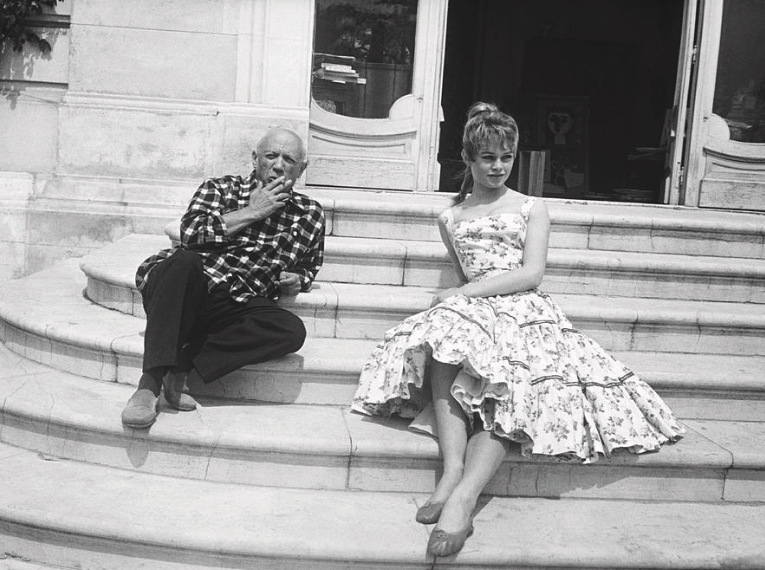
In May 1956, during the usual mix of screenings, press calls, and Riviera social life that came with the Cannes Film Festival, Brigitte Bardot made a short trip away from the crowds to visit Pablo Picasso at his studio in Vallauris. It was not arranged as anything formal, just one of those visits that tended to happen in the south of France at the time, where artists, actors, and journalists moved in the same loose circles.
Bardot was 21 and already working regularly, with 17 films behind her. She was known in France and beginning to attract attention abroad, particularly in the United States after her earlier appearance at Cannes in 1953, but she had not yet reached the level of recognition that would follow later that same year. The visit to Picasso came just before the release of And God Created Woman, the film that would shift her from a rising actress into a global figure. At this point, she was still somewhere in between. As Roger Vadim later put it, she “did not yet realise what she represented,” which fits the moment quite well.

By 1956, she was already drawing photographers in noticeable numbers. One journalist remarked that she seemed to attract cameras “in greater numbers than the films themselves,” which, while slightly overstated, reflected how quickly she had become a focus of attention.
Picasso, meanwhile, was in a very different position. At 74, he had been living in Vallauris since 1948, working extensively with ceramics at the Madoura pottery. This period is sometimes treated as secondary to his earlier work, but he approached it seriously, producing large numbers of pieces and experimenting with form and surface in a way that echoed his earlier innovations in painting.
Vallauris itself had become something of a small artistic centre by the early 1950s, largely because of Picasso’s presence. Ceramic workshops, visiting artists, and collectors passed through regularly, especially during the Cannes period. Bardot’s visit was not unusual in that sense. What made it stand out was simply who she was, and the fact that it was photographed and circulated.
The visit itself seems to have been straightforward. Vallauris was only a short distance from Cannes, so it was an easy trip. What turned it into something more widely known was the presence of LIFE magazine, which sent photographer Jerome Brierre to capture the meeting. Publications like LIFE were not just documenting events, they were actively looking for images that would translate well to readers, particularly in the United States. A young actress on the verge of international fame meeting one of the most established artists in the world was exactly the sort of contrast they wanted.
The photographs that came out of it are fairly understated. Bardot is seen looking around the studio, curious but not posing in any obvious way. Picasso appears as he often did in that period, calm, slightly removed, and focused on his surroundings. There is nothing particularly staged about the images, which is part of why they still hold up.
There was no suggestion that the meeting would lead to anything further. Picasso did not paint Bardot, which is sometimes pointed out given how often he worked with people around him. In reality, this was not unusual. By the mid 1950s, he was less focused on new portrait subjects, and he tended to return to the same individuals over time rather than work from brief encounters. As the art historian John Richardson noted, his studio in this period was “full of faces that never made it onto canvas.”

One detail that has followed the story is Bardot’s supposed interest in Lydia Corbett, who had been one of Picasso’s muses in the years just before this meeting. Corbett was known for her blonde ponytail, a look Picasso painted repeatedly. It has often been said that Bardot adopted a similar style after seeing her at Cannes. Whether that came directly from that meeting or was simply part of a wider visual trend is difficult to say, but it reflects how quickly styles moved between artists, models, and actors at the time.
The age difference between Bardot and Picasso, 21 and 74, was noted in the press, as was Picasso’s reputation for relationships with younger women. In this case, though, there is nothing to suggest the meeting was anything more than a brief visit. Picasso was used to a steady stream of visitors, and not all of them became subjects for his work.
Looking back, the encounter is useful mainly because of what it represents. Bardot was just about to become one of the most recognisable film stars of the period, her image shaped largely through photography and cinema. Picasso, already established, was working in a quieter but still productive phase, focused on ceramics and less concerned with public attention in the same way.
The photographs taken by Brierre are what remain. They show two people from different generations, each well known in their own field, meeting briefly without much ceremony. Bardot later described meeting Picasso as “like stepping into another world,” which feels about right. It was not a defining moment for either of them, but it has lasted because it was captured clearly and at the right time, when both were, in different ways, part of a changing cultural landscape.