

Hans Kasemann and His Midgets: The Biggest Little Act in Vaudeville History
- Apr 28
- 8 min read

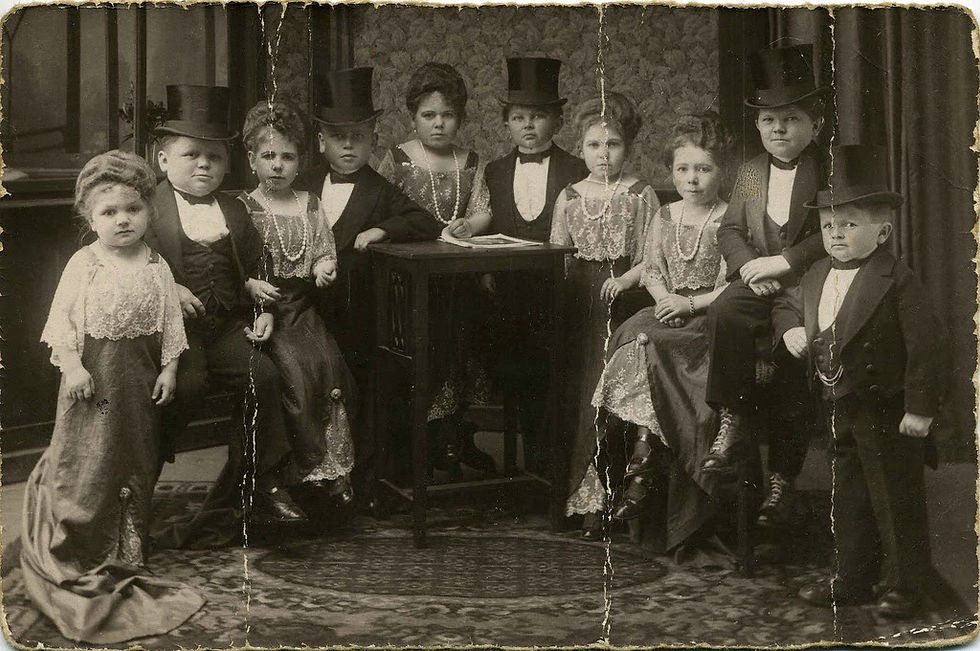
Picture a full-sized piano on a bare stage, and seated at it a tall, broad-shouldered German musician playing to a packed American theatre. All around him, performers who barely reach his elbows sing, dance, and command the room entirely. Hans Kasemann, impresario and pianist, knew exactly what he'd built. And what he built was remarkable: a touring troupe of little people performers who became one of the most talked-about acts in all of 1920s American Vaudeville.
This is their story.
What Was Vaudeville, and Why Did It Matter?
To understand just how significant the Hans Kasemann Midgets were, you have to understand the world they inhabited. Vaudeville was the dominant form of popular entertainment in the United States from the 1880s right through to the early 1930s, a live variety format in which a rotating cast of completely unrelated acts shared the same bill each night. One moment you'd have a classical violinist, the next a comedy duo, then a troupe of acrobats, a trained animal act, and maybe a one-act play squeezed in somewhere.
The format thrived on novelty, on the unexpected, on acts that audiences simply couldn't see anywhere else. Magicians, dancers, comedians, contortionists, impressionists, and even film shorts eventually made their way onto the Vaudevillian stage. It was, in many ways, the streaming service of its era: always something new, always something to grab your attention, priced to attract anyone with a spare nickel or dime.
At its peak, Vaudeville had major circuits booking acts into hundreds of theatres simultaneously. Performers spent their lives on the road, moving from city to city, sometimes performing multiple shows a day. The lifestyle was gruelling, the pay was inconsistent, but for the best acts, the rewards (in fame, in income, in the sheer thrill of a live crowd) were enormous.

From Germany to America: The Origins of the Kasemann Troupe
Hans Kasemann (his name sometimes recorded as "Kaesemann" in period sources) was not himself a little person. He was, by all accounts, a tall man, which made his relationship to his troupe all the more visually striking the moment they stepped onstage together. He'd originally assembled the group in his native Germany, likely in the years around or just after the First World War, drawing together a collection of talented performers with dwarfism who could sing, dance, act, and generally charm an audience.
By the early 1920s, Kasemann had made the decision to bring the whole operation across the Atlantic. American Vaudeville was the biggest market in the world for a working variety act, and the appetite for novelty was insatiable. He brought the troupe over, established them on the American touring circuit, and the act quickly made a name for itself.
The core of what they offered was deceptively simple. Kasemann would sit at a full-sized piano and play, the visual contrast between him and his performers already a draw in itself, while his little stars danced and sang around him. At other times, they'd drop the musical numbers entirely and take over the stage on their own, performing short comic plays and satirical vignettes that took aim at the news of the day. The troupe were, in other words, far more than a novelty. They were genuinely accomplished performers who could hold a room.
What "Burlesque" Actually Meant in the 1920s
If you've seen the word "burlesque" attached to the Hans Kasemann Midgets and pictured something closer to modern cabaret or striptease, it's worth pausing on that. In the 1920s, burlesque meant something quite different to what the word implies today.
Originally a literary and theatrical form that died out in England by the end of the 19th century, burlesque in American Vaudeville referred to comedy that worked through exaggerated imitation and satirical caricature the theatrical equivalent of a political cartoon. A burlesque performance might mock a pompous opera, skewer a recent political scandal, or parody a famous play. It was clever, irreverent, and thoroughly respectable by the standards of the day.
The shift toward the striptease associations we now connect to burlesque was gradual, and happened largely as Vaudeville itself declined in the late 1920s. Producers desperate to maintain audience numbers began incorporating more explicit content, and the word "burlesque" drifted along with it. By the time the format more or less died out, the original meaning had been almost entirely displaced.
For the Kasemann troupe, burlesque meant satire and comedy. Their vignettes lampooned current events, their performances were theatrical rather than titillating, and there's nothing in any surviving account to suggest they operated anywhere near what burlesque would eventually come to mean.
The Rivalry and Camaraderie: Other Midget Troupes of the Era
The Kasemann Midgets weren't operating in isolation. They were part of a surprisingly lively ecosystem of similar acts, and the relationships between those troupes appear to have been a mix of professional rivalry and genuine camaraderie.
The Klinkhart Midgets were perhaps the closest contemporaries. Managed by German-born Oscar Klinkhart (born around 1897), the troupe toured with the Al G. Barnes show between 1926 and 1931 before later joining the Hagenbeck-Wallace Circus. Photographs even exist of the Kasemann and Klinkhart troupes posing together a joint photo that suggests the rivalry between them was a friendly one, or at least collegial.

Rose's Royal Midgets sometimes called Rose's Midget Revue were another major act, assembled by New York impresario Ike Rose from performers recruited largely from across Europe, with Germany providing many of the troupe's members. Rose's show billed itself as "the Biggest Little Show on Earth" and played to considerable critical acclaim across the US and Canada from the 1920s all the way through to the 1950s.

The Rossow Midgets were similarly active on the circuit during the same period.
The sheer number of these troupes, all operating simultaneously, tells you something important about the era's appetite for this kind of performance. Little people in 1920s show business occupied a specific and in many ways privileged niche they were sought-after performers with genuine agency over their professional lives, and the better troupes were taken seriously by critics and audiences alike.

The Act in Practice: A Night With the Kasemann Midgets
Picture the scene. A theatre somewhere in middle America, Cincinnati perhaps, or Kansas City, or one of the countless smaller cities that made up the Vaudeville touring circuit. The house is full. The bill for the evening has already run through a comedian, a juggling act, and a soprano. Then the curtain rises on Kasemann's setup: a full-sized upright piano, stage right, its proportions looking almost absurdly large in the context of the performers beginning to assemble around it.
Kasemann himself takes his seat. He's the largest person onstage by a considerable margin, and he plays that contrast deliberately: the gentle giant at his instrument, a figure of warmth and stability while the real energy of the evening radiates from the performers around him. He begins to play, and the Pick sisters begin to move, and within moments the audience has forgotten whatever act came before.
The musical numbers would have occupied the first portion of the show: singing, dancing, the kind of entertainment that crosses language and cultural barriers, that communicates directly to an audience without needing explanation. After that, the troupe would often switch format entirely, shifting into the more theatrical material: the vignettes, the political satire, the light comedic plays that allowed performers like Auguste Pick and Willie Blaseri to show real acting range.
Kasemann might appear in these sections too, though he usually stayed at the piano. When he did join the performance, photographs suggest he appeared in full costume, a rare enough event that it registered as something special.
The whole act was built on a paradox: the visual novelty of little people sharing a stage with a full-sized man, but the underlying substance of genuinely skilled performance. The novelty got audiences through the door. The talent is what sent them home talking.
The Fall of Vaudeville and What Came After
The world that sustained acts like the Kasemann Midgets didn't last. Vaudeville's decline was rapid once it began. The arrival of talking pictures in 1926 (sound-synchronised films that could put top-tier performers in front of audiences simultaneously in hundreds of theatres) fundamentally undermined the economic logic of live touring variety. Why pay for a local show when you could watch actual movie stars for less?
By the late 1920s, many Vaudeville circuits were struggling. By the early 1930s, the format was effectively dead as a major commercial enterprise. The RKO studios famously absorbed the Orpheum circuit, one of the biggest Vaudeville chains in America, and converted its theatres wholesale into cinemas.
For midget troupes, the transition was harder than for some performers. Legitimate theatrical careers and film roles existed, but were limited and often condescending. Some troupes shifted into circus work. Others played fairs and carnivals. The Klinkhart troupe, for instance, ended up associated with one of the legendary "Midgetville" communities in Riverside, California after being stranded there in 1936.
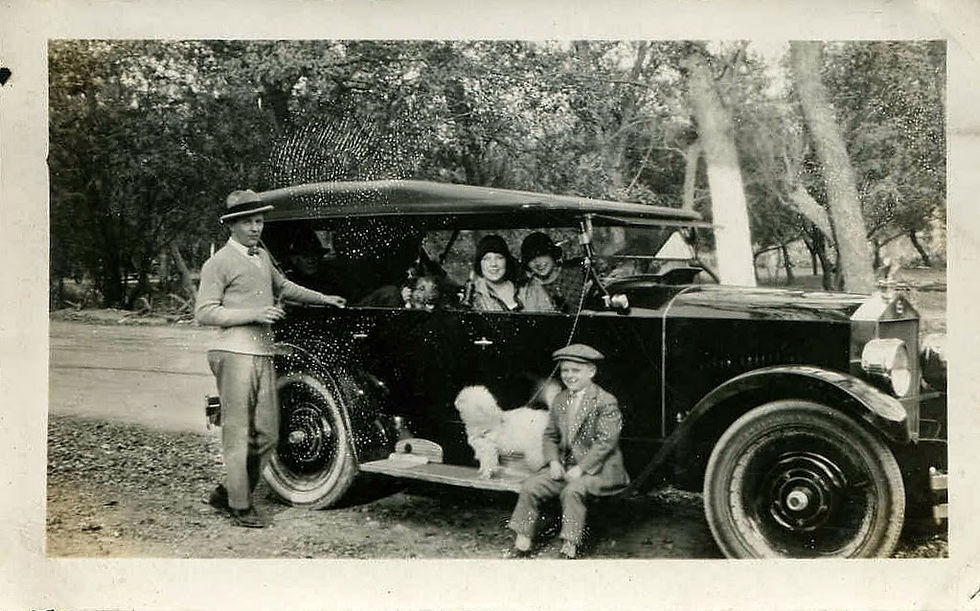
What happened to Hans Kasemann himself after Vaudeville's collapse isn't recorded in surviving accounts. The photographs he left behind, dozens of them capturing his troupe in performance, in travel, in the quiet moments between shows, are the clearest record that remains of what he built. They show not just a novelty act, but a company of people who took their work seriously, who toured together, who looked after each other, and who performed at the highest level the era had to offer.
Why Hans Kasemann Still Matters
It's easy to look at acts like the Kasemann Midgets through a modern lens and feel uncomfortable, and to an extent, that discomfort is appropriate. The framing of little people as inherently spectacular, as visual novelties whose bodies were part of the act itself, reflects the attitudes of an era that had a very different relationship to disability and difference than we do today.
But there's another reading that deserves equal weight. For the performers in troupes like Kasemann's, Vaudeville offered something genuinely valuable: professional employment, artistic outlet, a community, a degree of fame, and the ability to make a living doing something they were clearly skilled at. In a world with almost no formal protections for disabled workers and very limited opportunities, the Vaudeville stage was one of the few places where a performer with dwarfism could build a real career.
The Pick sisters, Anna Rockel, Willie Rolle: these weren't props. They were artists. The photographs show them in elaborate costumes, in mid-performance freeze-frames, in the quiet ordinariness of life on the road. They laughed, they did laundry, they posed with their rivals from the Klinkhart troupe. They lived professional lives, and they left enough behind to be remembered.
Hans Kasemann gave them a stage. They filled it completely.
Quick Facts: Hans Kasemann and His Midgets
Active: Early 1920s through to at least the late 1920s
Origin: Germany (troupe formed there, relocated to the US in the early 1920s)
Format: Vaudeville and burlesque variety act
Key performers: Hans Kasemann (pianist/leader), Olga Pick, Auguste Pick, Anna Rockel, Willie Rolle, Willie Blaseri
Act type: Musical performance, comedy vignettes, satirical theatrical plays
Contemporary rival troupes: The Klinkhart Midgets, Rose's Royal Midgets, the Rossow Midgets
Circuit: US theatre and music hall touring circuit
Sources and Further Reading
Art-Sheep Photos Of The Burlesque Midget Performers Of The 1920s America https://art-sheep.com/photos-of-the-burlesque-midget-performers-of-the-1920s-america/
Viola.bz Vintage Vaudeville: Popular Little Performers of the 1920s https://viola.bz/vintage-vaudeville/
Vijay Pithadia / Beißen Gedanken Burlesque Troupe Of Midgets https://www.vijaypithadia.in/2015/04/burlesque-troupe-of-midgets.html
Travalanche (WordPress) Klinkhart's Troupe of Midgets https://travsd.wordpress.com/2016/11/30/klinkharts-troupe-of-midgets/
Travalanche (WordPress) Stars of Vaudeville: Rose's Royal Midgets https://travsd.wordpress.com/2013/01/18/stars-of-vaudeville-573-roses-royal-midgets/
Music Weird Rose's Midget Revue, Part 1: 1920s–1950s http://musicweird.blogspot.com/2020/05/roses-midget-revue-part-1-1920s-1950s.html
University of Arizona / American Vaudeville Museum Burlesque: The "Other" Side of Vaudeville by Sidney Pullen https://sites.arizona.edu/vaudeville/burlesque-the-other-side-of-vaudeville-by-sidney-pullen/
Wikipedia Vaudeville https://en.wikipedia.org/wiki/Vaudeville
Flickr archive Vaudeville Troupe 1920s https://www.flickr.com/photos/41264581@N02/21217267725/
eBay vintage print listings (historical photographic record) Kasemann Midgets performance photographs https://www.ebay.com/itm/264882423579


