

Grace McDaniels: The Remarkable Life of the “Mule-Faced Woman” Who Made a Living in the Sideshows of America
Updated: Jul 31

Imagine living in a time when curiosity meant entertainment and difference meant spectacle. That was the world Grace McDaniels was born into in 1888, a world that looked at people who didn’t “fit the mould” with a mix of fascination and cruelty. Grace, often billed as the “Mule-Faced Woman,” became one of the most recognisable sideshow performers of her era, yet behind the banners and headlines was a deeply kind woman who lived her life with quiet dignity and grace.
Born in the small farming community of Valeska, near Numa, Iowa, Grace entered the world to “perfectly normal” parents, with no family history of deformity. Her facial appearance is most commonly attributed to Sturge-Weber syndrome, though no verified medical documentation survives, and some researchers have proposed alternative diagnoses, including PHACE syndrome or other vascular overgrowth disorders. It gave Grace a distinctive appearance that the entertainment world of the early 20th century would cruelly capitalise on.
But Grace wasn’t just a “curiosity” on a circus poster. She was a mother, a businesswoman, and a woman who managed to transform what society saw as a tragedy into a career that allowed her to travel, earn a living, and care for her child.

Early Life in Iowa
Grace’s early years were spent on the family farm. Accounts from locals later described her as shy but determined. Despite struggling to speak as a young child, she gradually gained fluency and confidence. Her speech difficulties may have been tied to her condition, but she never let them stop her from communicating or connecting with others.
The late 19th and early 20th centuries were not kind to those with physical differences. Many people with visible deformities were shunned, institutionalised, or hidden from public life. Grace’s entry into the world of sideshows was, for her, a way to reclaim her life and her independence.

From “Ugliest Woman” to Circus Star
In 1935, Grace’s life took a dramatic turn when she entered and won a contest billed as “The Ugliest Woman” competition. What might sound cruel today was, at the time, a form of public spectacle that drew huge crowds. It was this win that caught the attention of Harry Lewiston, a well-known showman and owner of Harry Lewiston’s Traveling Circus.
Lewiston’s show was part of a long American tradition of “freak shows” that displayed people with rare physical traits or medical conditions. While modern audiences would find the idea exploitative, these shows often offered financial stability and even a degree of fame for people who had few other options in a deeply prejudiced society.

Grace joined the circus and quickly became one of its highest-paid performers, earning $175 per week, a considerable sum during the 1930s, especially in the midst of the Great Depression. She travelled extensively across the United States and Canada, performing for fascinated crowds who came to see the “Mule-Faced Woman.”
Despite her professional success, Grace remained humble and private. She disliked being photographed and felt that over-publicising her image would show a lack of self-respect. This sense of dignity set her apart from some other performers of the era who leaned into the sensationalism of sideshow life.
Behind the Tent: Grace as a Mother and Woman
Offstage, Grace McDaniels lived an entirely different life. She was known by those around her as gentle, kind, and remarkably nurturing. Grace had a son, Elmer. However, accounts differ on Elmer's origins. The commonly repeated version is that Grace married briefly in the 1930s before his birth. At least one sideshow history source gives a much darker account, claiming she was raped by a carnival worker and that this is how she came to have Elmer. This second version isn't corroborated anywhere else I could find, so it should be treated as a single-sourced claim rather than settled fact, but it's a significant enough discrepancy that the tidy "brief marriage" version shouldn't be presented as certain either.

“Her greatest treasure,” Grace once called Elmer, and it showed. Elmer would eventually travel with his mother, helping to manage her bookings and finances as she toured with Lewiston’s show. The duo formed a close-knit family, living much of their lives on the road together.
Friends and colleagues recalled how protective Grace was of her son and how hard she worked to provide him with stability in a world that was often unpredictable. Despite the harshness of the sideshow circuit, she carved out a home wherever she went, even if that home was a caravan or a tent pitched in a muddy fairground.
Some later accounts complicate that picture considerably. According to several retrospectives on sideshow history, Elmer grew into a troubled adult, developing alcohol and morphine dependencies and reportedly becoming abusive toward the mother who'd built her whole career around providing for him. He's said to have stolen from Grace and from her employers to cover gambling debts, and some sources tie the eventual decline in her bookings directly to his reputation. If accurate, it makes her story considerably sadder than the postcard version: a woman who endured a lifetime of public cruelty over her appearance only to be let down, in private, by the one person she'd built that entire life around.

The Duality of Sideshow Life
To understand Grace McDaniels’ life, one must also understand the sideshow world she inhabited. The 1930s and 1940s were the golden age of American circus and sideshow entertainment. Names like P.T. Barnum had already paved the way for performers such as Schlitzie the Pinhead, Johnny Eck, and Daisy and Violet Hilton, all of whom lived their lives under the big top spotlight.
For performers like Grace, the sideshow was both a livelihood and a form of acceptance. While audiences often gawked in shock or pity, within the circus community itself, performers were treated with respect and affection. The circus, for all its exploitative undertones, provided a place where difference wasn’t hidden away but rather became part of a shared, if unconventional, family.
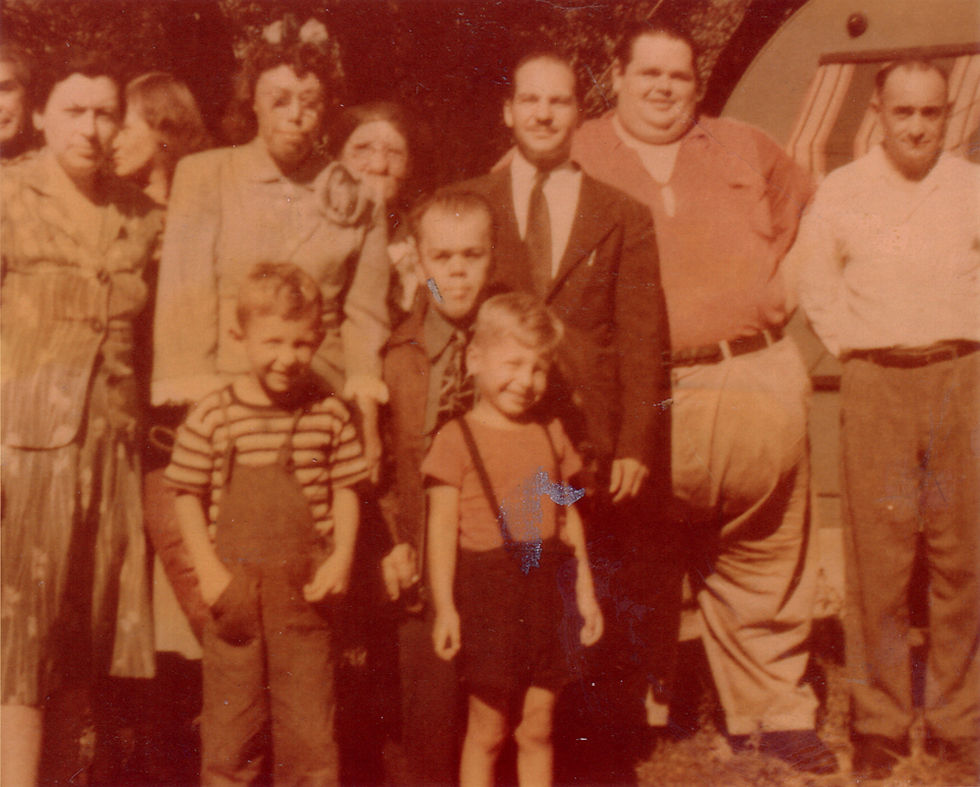
Grace, who reportedly avoided alcohol and never swore, became something of a “mother figure” among the performers. Her humility and sense of dignity earned her the admiration of her peers. Harry Lewiston himself, in his memoir 'In Spite of Everything: The Story of My Life' (1950), referred to her with great respect, noting that she was “as fine a lady as ever graced a sideshow stage.”
A Quiet End to an Extraordinary Life
Grace continued performing for more than two decades. By the 1950s, the era of the sideshow was beginning to wane. Television and changing cultural attitudes made live exhibitions of human difference less popular and less acceptable.
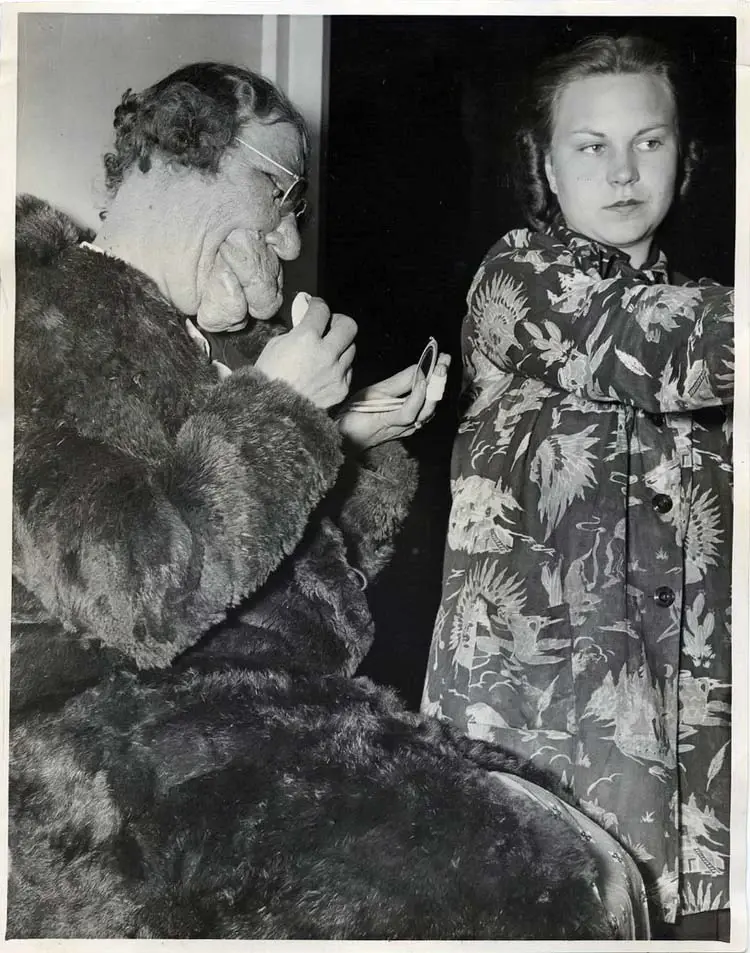
Grace settled in Gibsonton, Florida, a small town on Tampa Bay that became known as "Showtown USA," the winter home and eventual retirement community for generations of American circus and sideshow performers. For decades, Gibsonton was the one place in the country where people who'd spent their working lives as public curiosities could simply be neighbours.
In her later years, Grace’s health began to fail, though she continued touring as long as she could. She passed away on 29 July 1958 in Chicago, between tour stops, at the age of 70.
Grace was buried near her family, far from the carnival lights and crowds that had defined much of her life. Those who knew her said she faced the world’s cruelty with an unbreakable calm and a refusal to be pitied.
Legacy
Grace McDaniels’ life is more than a story of a sideshow performer. It’s a reflection of how society once viewed difference and how individuals like Grace managed to carve out dignity in a world that often denied them that right.

While the posters and circus flyers of the time may have sold her as a curiosity, those who met her remembered a woman of warmth, intelligence, and resilience.
Today, the circus world has evolved. The idea of displaying people for entertainment is largely gone, replaced by performance artistry that celebrates talent rather than deformity. Yet, figures like Grace McDaniels remain an important part of that history, not as spectacles, but as pioneers who lived courageously in the face of judgment.
As disability historian Robert Bogdan noted in Freak Show: Presenting Human Oddities for Amusement and Profit, that many sideshow performers saw themselves less as victims of exploitation and more as entertainers working a trade, often on better terms than the audiences who came to gawk at them. Grace embodied that spirit fully, a woman who refused shame, embraced her humanity, and provided for her family on her own terms.

Conclusion
Grace McDaniels lived in a world that wanted to turn her into a spectacle, but she reclaimed that narrative, building a life filled with love, respect, and resilience. Her condition may have drawn attention, but her heart, dignity, and devotion to her child are what made her unforgettable.
In a society that still struggles with how it views physical difference, her story remains relevant, a testament to the power of self-respect even when the world stares.
Sources
Sturge-Weber Foundation. “Understanding Sturge-Weber Syndrome.” https://sturge-weber.org
Iowa Historical Review. “The Life of Grace McDaniels.” Local archive publication, 1995.
Show History. “The Circus Women Who Rewrote the Rules.” https://circushistory.org


