


Viale dei Martiri: The Tragic Legacy of the Bassano del Grappa Massacre
Updated: Mar 21

In the northern Italian town of Bassano del Grappa, there is a long, tree-lined avenue known as Viale dei Martiri – the Avenue of the Martyrs. Today, it is peaceful and green, but in September 1944, this same street witnessed one of the darkest days of the Second World War in Italy.
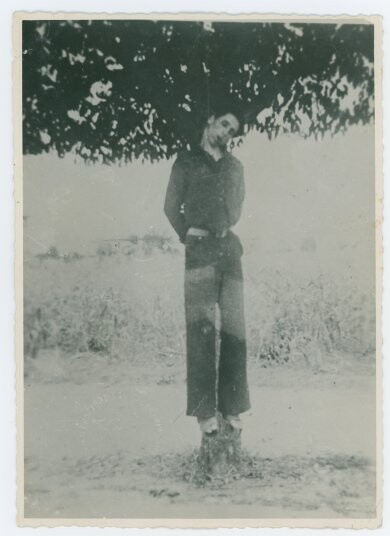
Each tree along the road once held a man who had resisted fascist rule. Their hands were tied behind their backs, and signs hung from their necks with the words brigands or bandits. It was a warning to others not to support the growing resistance movement against the Nazi and Fascist forces occupying northern Italy.
The events of September 1944
By 1944, northern Italy was still under German occupation. Although Benito Mussolini’s Fascist government had fallen the year before, he was reinstated as head of the so-called Italian Social Republic, a puppet regime controlled by Berlin.
In the Veneto region, partisan resistance groups were becoming increasingly organised. These were made up of civilians – workers, teachers, farmers, students, and former soldiers – who carried out acts of sabotage, gathered intelligence, and helped Allied soldiers escape across the mountains.
Bassano del Grappa, at the foot of Monte Grappa, became one of the centres of this resistance. Its geography made it ideal for partisan activity but also left it vulnerable. By September 1944, German and Fascist authorities had decided to eliminate the movement once and for all.
On 26 September 1944, troops moved into Bassano. What followed was a coordinated operation to round up anyone suspected of aiding partisans. Over 400 anti-Fascists were killed, and another 500 were deported to labour and concentration camps in Germany and Austria.
Thirty-one captured partisans were selected for public execution. Their deaths were to serve as a deterrent, an act of fear rather than warfare.

The hangings on the avenue
The condemned men were brought to a quiet avenue on the edge of the town. They were tied to the trees that lined the road, their hands bound behind their backs. Around their necks hung signs labelling them as bandits.
The executions were overseen by SS officer Karl Franz Tausch, who was just 22 years old, and Lieutenant Herbert Andorfer, a more senior officer already notorious for his role in the Holocaust.
Instead of traditional ropes, telephone wire was used to make the nooses. Each one was fixed to a truck, which would pull forward suddenly to tighten the wire around the men’s necks.
The bodies were left hanging for nearly twenty hours. The occupying forces forced townspeople to walk past the avenue throughout the day, ensuring that the scene would be seen and remembered. It was an act of intimidation, calculated and deliberate.
When the soldiers finally removed the bodies, the people of Bassano gathered to collect and bury their dead. Many of the men were in their twenties. Some were students and teachers, others were farmers and labourers. The youngest, Giuseppe Basso, was only seventeen.

The men behind the massacre
Two men were primarily responsible for the massacre: Karl Franz Tausch and Herbert Andorfer.
Andorfer, born in Austria, had already gained a reputation for his brutality. Before being stationed in Italy, he had been the commandant of the Sajmište concentration camp in Belgrade, where around 5,000 Jews were murdered. He was later tried in Germany for crimes committed there but was never prosecuted in Italy for Bassano del Grappa.
Tausch, on the other hand, was much younger. Locals remembered him as cold and methodical, earning him the grim nickname il boia tedesco – “the German executioner.” After the war, he returned to Germany, where he lived quietly for decades.
In 2008, on the eve of the massacre’s anniversary, he died by suicide at the age of 86. Some Italian newspapers suggested he may have been confronted with new evidence or questions about his past. Whether motivated by guilt or fear, his death brought the case to a close without any formal justice being done.
The women of Bassano
Although no women were hanged on Viale dei Martiri, they played a crucial role in the events leading up to and following the massacre.
Women in Bassano, as across northern Italy, were central to the partisan network. They delivered messages, smuggled weapons, hid fugitives, and provided food and shelter to fighters hiding in the mountains. Many also took part directly in resistance activities, often using their social invisibility as an advantage.
After the massacre, women were the first to respond. They went into the streets to collect the bodies, identified the dead, and comforted the grieving families. Some, such as Giuseppina Scalet, were later imprisoned or deported for helping partisans.
Their contribution is not as widely recorded as that of their male counterparts, but without them, the movement could not have survived. In the years since, local historians have made efforts to highlight their bravery as part of Bassano’s collective memory.

The Italian Resistance and its legacy
The massacre at Bassano del Grappa was one of many that occurred across occupied Italy in 1944. Others, such as those at Sant’Anna di Stazzema, Marzabotto, and the Ardeatine Caves, followed similar patterns of retaliation. The common aim was to crush the resistance through fear.
Instead, these atrocities deepened the resolve of those still fighting. The Resistenza, as it became known, continued its campaign until the final liberation of northern Italy in April 1945.
In Bassano, the events of 1944 came to symbolise both the suffering and courage of ordinary people. The executions shocked the community, but they also united it in quiet defiance.
Justice and remembrance
After the war, Italy faced the difficult task of rebuilding its institutions and dealing with its wartime past. Many Nazi officers and Fascist collaborators escaped trial due to political complications, particularly as the Cold War began.
Herbert Andorfer and Karl Franz Tausch were among those who evaded accountability for the massacre. While Andorfer’s later conviction in Germany addressed other crimes, the killings at Bassano were never legally resolved.
For the people of Bassano, remembrance became the only form of justice available.
The avenue where the executions took place was renamed Viale dei Martiri, the Avenue of the Martyrs. Each tree was dedicated to one of the victims, with a plaque bearing his name. Today, these plaques remain well-tended, with flowers laid beneath them each September.

Viale dei Martiri today
Modern-day Bassano del Grappa is a lively and welcoming town, known for its wooden bridge, Ponte Vecchio, designed by Andrea Palladio, and for its local spirit, grappa. Yet amid its charm, history remains close.
Visitors walking along Viale dei Martiri find a peaceful, shaded street. At first glance, it seems like any other Italian avenue, but the small plaques at the foot of each tree tell a different story. Each name marks a life taken on that day in 1944.
Every year, on 26 September, the town holds a quiet commemoration. Schoolchildren, residents, and officials gather to pay tribute. The ceremony is modest but heartfelt, a reflection of how deeply the event is woven into the identity of the town.
The meaning of memory
Eighty years later, the massacre of Bassano del Grappa is remembered not only as a wartime tragedy but as a moment of collective resilience.
The people who lived through it refused to let their neighbours be forgotten. The decision to rename the street and preserve the trees as living memorials ensured that the town’s story would not fade.
There is an inscription on one of the memorial plaques that reads:
“They gave their lives so that Italy could live free.”
It is a simple sentence that captures the spirit of those times. The men hanged on Viale dei Martiri were not soldiers by profession; they were ordinary people caught in extraordinary circumstances, who believed that freedom was worth the risk.
Visiting Bassano del Grappa
For anyone visiting Bassano today, Viale dei Martiri offers a chance to reflect quietly on the realities of occupation and resistance. The nearby Museo degli Alpini includes exhibits on the Italian partisans, and the surrounding Monte Grappa area is dotted with wartime memorials and shelters once used by fighters.
To walk the avenue is to see how remembrance and everyday life coexist. Children play nearby, bicycles pass under the trees, and flowers bloom at the base of each memorial. It is not a site of grand monuments but one of steady, enduring respect.

Legacy
The Bassano del Grappa massacre stands as a stark reminder of the cost of resistance and the strength of community memory.
While those responsible never faced Italian justice, the town transformed a place of fear into one of remembrance. Today, Viale dei Martiri is more than a street; it is a record of courage, a lesson in humanity, and a living reminder of how ordinary people shape history.
The victims of the Nazi-Fascist massacre were
Mario Aliprandi, from Mestre
Emilio Beghetto, from Tombolo
Armando Benacchio, from Pove del Grappa
Giacomo Bertapelle, from Borso del Grappa
Giuseppe Bizzotto, from Rossano Veneto
Gastone Bragagnolo, from Cassola
Ferdinando Brian, from Pove del Grappa
Pietro Bosa, from Pove del Grappa
Bortolo Busnardo, from Mussolente
Francesco Caron, from Pove del Grappa
Francesco Cervellin, from Borso del Grappa
Giovanni Cervellin, from Borso del Grappa
Pietro Citton, from Borso del Grappa
Giovanni Cocco, from Cassola
Leonida De Rossi, from Crespano del Grappa
Attilio Gaspare Donazzan, from Pove del Grappa
Angelo Ferraro, from Pove del Grappa
Carlo Fila, 30 years old, teacher, from Tramuschio di Mirandola
Pietro Giuseppe Giuliani of Cheremule
Cesare Longo, 17 years old, from Pove del Grappa (suffering from bronchopneumonia)
Silvio Martinello, from Pove del Grappa
Girolamo Moretto, from Borso del Grappa
Giuseppe Moretto, from Romano d'Ezzelino
Fiorenzo Puglierin, from Pove del Grappa
Giovanni Battista Romeo, 16 years old, from Pove del Grappa (his brother Raffaele had been shot 2 days earlier)
Luigi Giuseppe Stefanin, from Cavaso del Tomba
Albino Vedovotto, from Borso del Grappa
Ferruccio Zen, from Pove del Grappa
Giovanni Favero, from Borso del Grappa
Giacomo Bertapelle, from Borso del Grappa
Unknown
The list of victims is not well defined, despite all sources speaking of a total of 31 people. However some believe that the names of the victims should also include:
- Carlesso Alberto (initially classified as unknown);
- Danieletto Alberto (or Antonio) originally from Modena;
- 2 former Allied prisoners.
Sources
Museo Civico di Bassano del Grappa – Historical Archives
ANPI (Associazione Nazionale Partigiani d’Italia): Records of the Massacre of Bassano del Grappa
Comune di Bassano del Grappa official memorial site: https://www.comune.bassano.vi.it
Corriere della Sera archives: “Il boia tedesco si uccide alla vigilia della strage” (2008)
La Repubblica archives: “Bassano, la via dei martiri e la memoria dei partigiani” (2009)
German Federal Archives – Records of Herbert Andorfer and Karl Franz Tausch
Istituto Luce Cinecittà archives – “Donne nella Resistenza Veneta” (2014)


