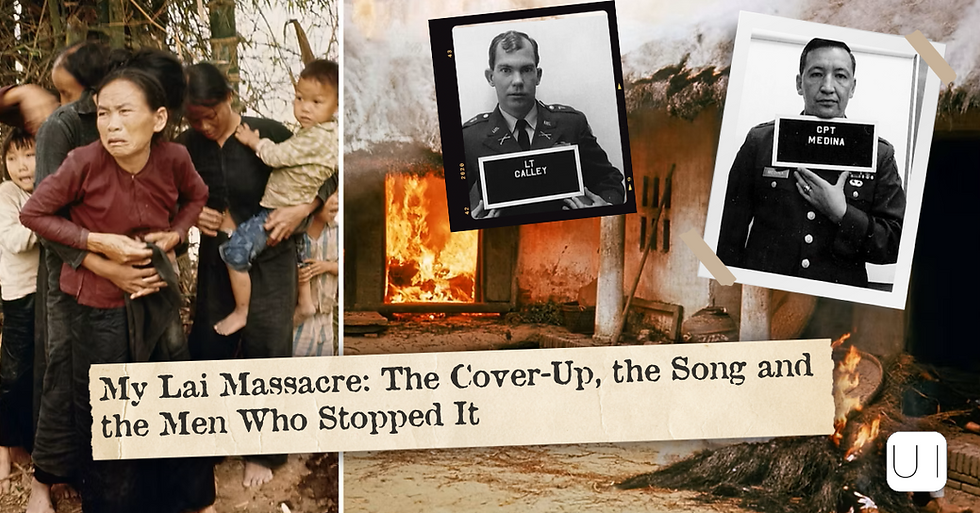
Kent State 1970: Four Students Killed, No One Jailed, and a Settlement That Barely Covered the Bills

On May 4, 1970, members of the Ohio National Guard opened fire on a crowd of students at Kent State University in Ohio, killing four young people and wounding nine others. The 13 seconds it took to fire 67 rounds didn't just end four lives. It cracked something open in the American public's relationship with its own government, and the aftershocks ran for decades.
Two of the dead were at the rally protesting the Vietnam War. The other two were bystanders walking to class. The nearest victim was 265 feet from the soldiers. The farthest was 750 feet away. Nearly every single one of them was unarmed. The FBI later concluded that the National Guard's self-defense claims were fabricated. Not a single guardsman ever faced criminal punishment. And the families of the dead received a settlement, nine years later, that didn't even separate out their legal fees.
This is the full story.
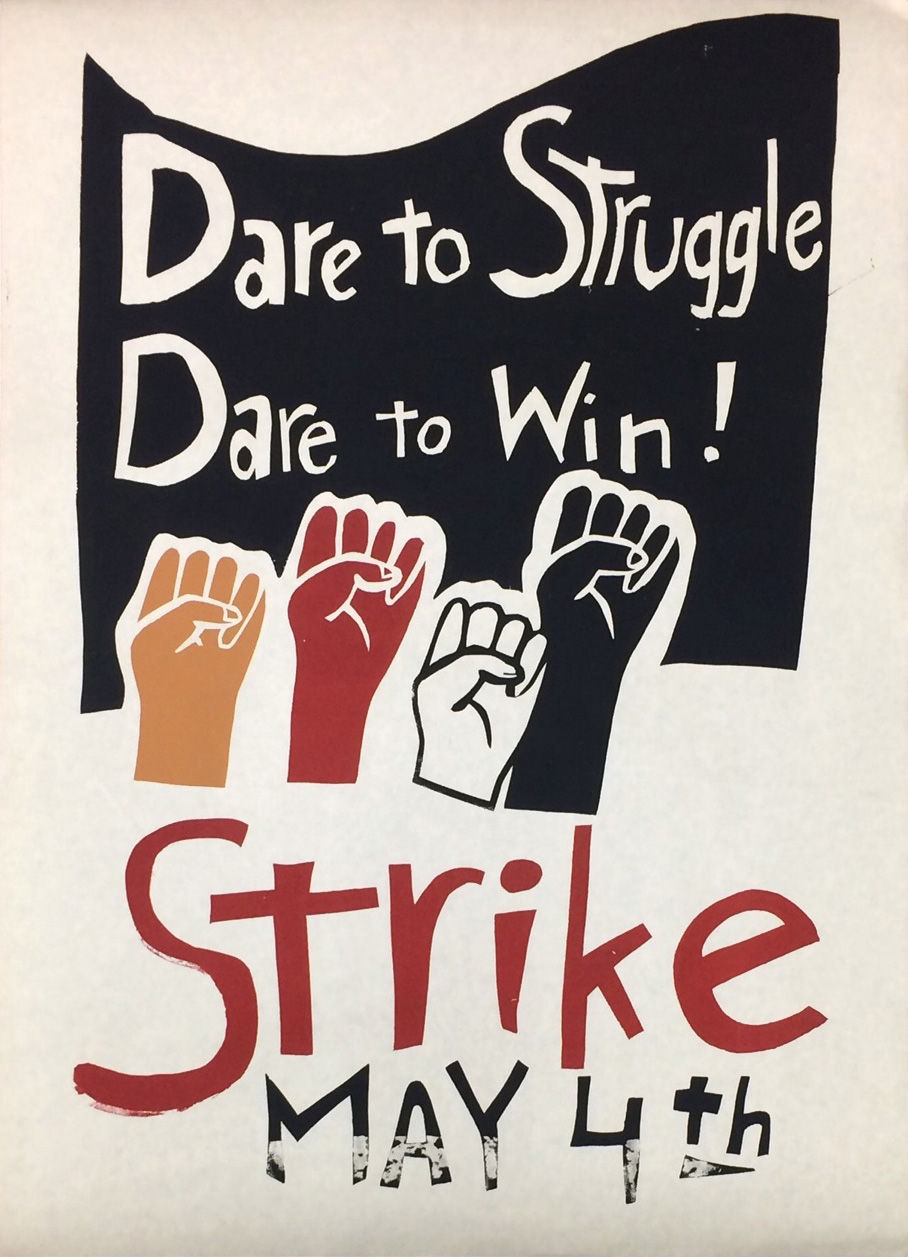
The Context: A Country Already Boiling
By 1970, the Vietnam War had been grinding on for years. When Richard Nixon won the 1968 presidential election, he'd promised to end it. But in late April 1970 he did the opposite: he announced on national television that U.S. forces had invaded Cambodia, expanding the war into a neutral country.
Campus protests erupted across America almost immediately. At Kent State University in Ohio, students gathered on May 1 on the Commons, a central grassy area traditionally used for rallies. One group symbolically buried a copy of the U.S. Constitution to represent what they saw as Nixon's killing of it. Another rally was planned for May 4.
That same evening, Nixon arrived at the Pentagon and, when greeted by a supportive employee, went off script. He turned his praise for the troops into a broadside against student protesters, calling them "bums" who were "burning up the books." It was the kind of language that, as the following days would show, set the temperature well past boiling.
The Weekend Before the Shooting
Friday night in downtown Kent started like most Friday nights, with people in bars. But it escalated quickly. A crowd gathered, bonfires were lit in the street, police cars were hit with bottles, and shop windows were broken. The entire Kent police force was called in. The mayor declared a state of emergency, ordered bars closed early, and called the governor's office for help.
The next day, Saturday May 2, Mayor Leroy Satrom asked Ohio Governor James Rhodes to send in the National Guard. His reasons included rumours, some confirmed, some not, that radical outsiders had come to destroy the city, that buildings had been targeted, and that local forces couldn't cope. The Guard arrived around 10pm, just as the wooden ROTC building on campus was burning to the ground, with over a thousand demonstrators watching.

Sunday May 3 brought a very different mood. The campus, now occupied by nearly a thousand National Guardsmen, looked like a military zone. Students and soldiers chatted amicably in the sunshine. But Governor Rhodes flew in and gave a press conference that set a very different tone. He called the protesters "the worst type of people that we harbor in America," comparing them to Nazis and night riders. He said he would seek a court order to ban all demonstrations and implied martial law was in effect.
He never actually sought that court order. But the impression was firmly established: rallies were banned, the Guard was in charge, and the campus was under something close to military control.
May 4, 1970: What Actually Happened on the Commons
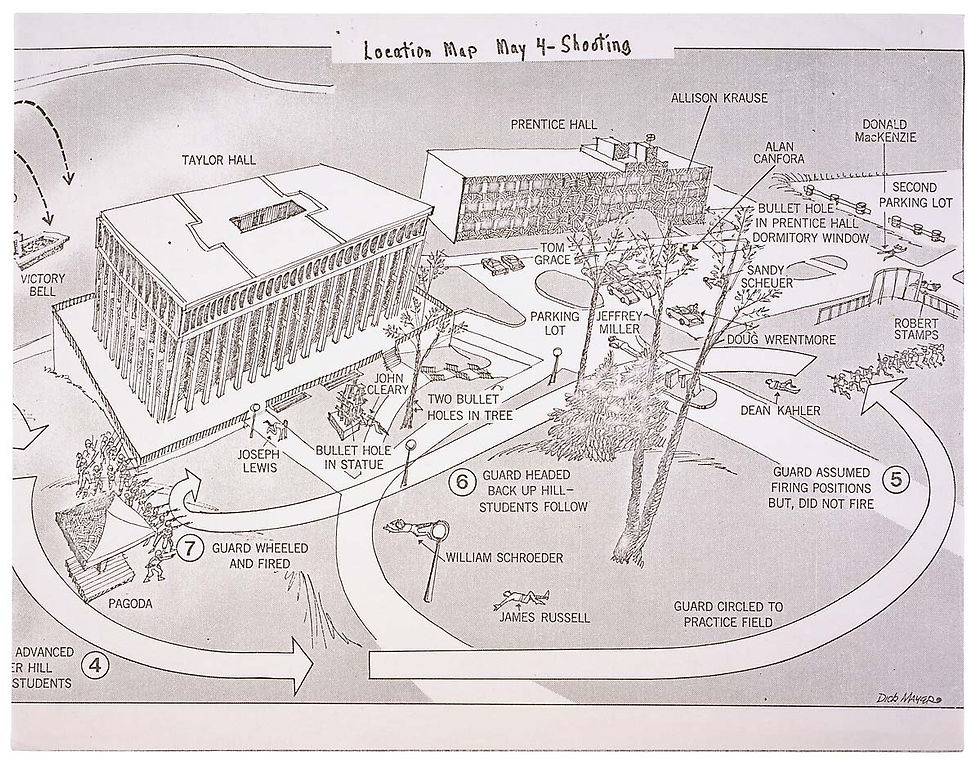
Despite the distribution of 12,000 leaflets declaring the noon rally banned, a crowd of around 3,000 people gathered on and around the Commons by midday. Most estimates put the active protesters at about 500, gathered near the Victory Bell. Another thousand or so were cheering them on, while roughly 1,500 more were simply watching from the edges, many of them on their way between classes.
The National Guard, under the command of Brigadier General Robert Canterbury, attempted to disperse the crowd. First a bullhorn announcement, which most people couldn't hear. Then a jeep drove through the crowd to repeat the order, which was met with chanting, protest songs, and a few thrown rocks, one of which hit the vehicle. The Guard then fired tear gas, but much of it was made ineffective by the wind, and some students threw the canisters back.

Guardsmen then advanced across the Commons with bayoneted M1 rifles. Students retreated up and over a hill known as Blanket Hill, then down into the Prentice Hall parking lot and onto an adjoining practice football field. The Guard followed and ended up boxed into a fenced corner, where they stayed for roughly ten minutes.
Some students threw rocks from beyond the fence. Then the Guard turned and began marching back up the hill. When they reached the crest, 28 of the more than 70 guardsmen turned and opened fire without any verbal warning. The shooting lasted 13 seconds. Between 61 and 67 shots were fired.
It was 12:24pm.
The Four Who Died
Allison Beth Krause, 19, from Pittsburgh, Pennsylvania. She was a freshman in the Honors College. The day before the shooting she had reportedly placed a flower in the barrel of a guardsman's rifle and said "flowers are better than bullets." She was 343 feet from the Guard when she was shot in the chest. She died before reaching hospital.
Jeffrey Glenn Miller, 20, from Plainview, Long Island. He was a sophomore studying psychology. Miller had transferred to Kent State from Michigan State just months earlier and had already made close friends with Krause and Scheuer. He'd been actively protesting and had lobbed a tear gas canister back at the Guard earlier in the confrontation. He was 265 feet away when he was shot through the mouth. He died instantly.
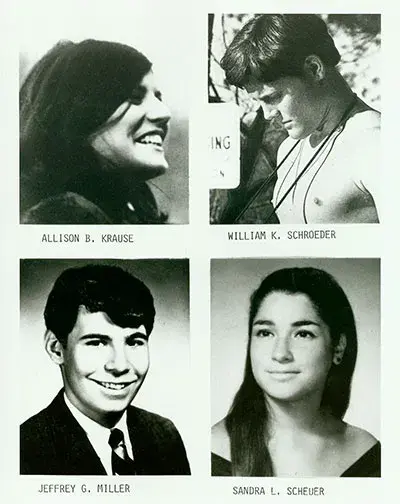
Sandra Lee Scheuer, 20, from Youngstown, Ohio. She was a junior studying speech and hearing therapy. Scheuer wasn't a protester. She was walking to class. A bullet pierced her neck from 390 feet away. She bled to death within minutes.
William Knox Schroeder, 19, from Lorain, Ohio. He was a sophomore studying psychology and, ironically, a member of the campus ROTC battalion, the very program the protesters had targeted earlier that weekend. He was also simply walking to class, 390 feet from the Guard, when he was shot in the back. He was taken to Robinson Memorial Hospital in nearby Ravenna, where he died about an hour later.
Of the nine students wounded, Dean Kahler was the most seriously hurt. He was struck in the back at roughly 300 feet and was left permanently paralysed from the waist down. The student farthest from the firing was Donald MacKenzie, who was hit in the neck at a distance of 750 feet from the Guard. None of those shot was closer than 71 feet.

What Witnesses Saw
Chrissie Hynde, later the lead singer of The Pretenders, was a Kent State student that day. In her autobiography she described hearing what sounded like fireworks, then a silence, then a student's voice cutting through it: "They fucking killed somebody."
Gerald Casale, later a founding member of Devo, saw two of his friends die. "I saw exit wounds from M1 rifles out of the backs of two people I knew," he said years later. "They shot into a crowd that was running from them."
Many in the crowd assumed the weapons were loaded with blanks, right up until they saw bullets striking the tarmac around them.
Why Did They Fire? What the Guard Said vs. What the FBI Found
The guardsmen's official position was self-defense. They claimed they feared for their lives, that they were surrounded, that the crowd was advancing on them in a threatening manner, that rocks were raining down so thickly "the sky was black with stones," and that a sniper had fired at them first.
The FBI investigation found almost none of this to be true.
An internal Justice Department summary of the FBI's findings, which was revealed in a Senate floor speech by Ohio Democrat Stephen Young in October 1970, contained a damning line: the Guard's claim that their lives were endangered by the students "was fabricated subsequent to the events." In plain English: they made it up after the fact.

The FBI's investigation found that no guardsman had been hit by rocks immediately before the firing. The guardsmen weren't surrounded. There was no confirmed sniper. A separate FBI probe into the claim that a sniper fired at the Guard concluded that the Guard fired first. Several guardsmen who fired had their backs turned to the protesters when they opened fire. Two guardsmen who denied firing were found, according to the FBI, to have probably lied.
The President's Commission on Campus Unrest, known as the Scranton Commission after its chair William Scranton, delivered its own verdict in September 1970: "The indiscriminate firing of rifles into a crowd of students and the deaths that followed were unnecessary, unwarranted, and inexcusable."
That commission was itself created by Nixon in June 1970 specifically to investigate campus unrest. The fact that his own appointed body concluded his own National Guard had acted inexcusably was, to put it mildly, not a headline Nixon welcomed.
The Legal Aftermath: Federal Charges, a Dismissed Case, and No Criminal Convictions
Why Murder Charges Weren't Brought
Murder is, under U.S. law, primarily a state crime, except in specific circumstances such as the killing of a federal officer or federal judge. The Ohio National Guard shootings at Kent State were state actors killing state residents, which meant federal murder charges simply weren't an option. And the state of Ohio never charged a single guardsman with anything.

The Federal Civil Rights Case
Federal prosecutors took a different route. Eight Ohio National Guardsmen were indicted by a federal grand jury on charges of depriving the students of their civil rights. The legal theory was that the guardsmen had violated the students' constitutional rights by shooting them without justification.
But the case ran into a specific and difficult legal problem. The federal civil rights statutes required prosecutors to prove that the defendants acted with the specific intent to deprive the victims of their constitutional rights. In other words, it wasn't enough to show the shooting was unjustified. Prosecutors had to show the guardsmen intended to violate civil rights.
Here the facts of the shooting worked against the prosecution in an unexpected way. The four students who died weren't the closest students to the Guard. They were hundreds of feet away. Two of them weren't even protesters. The Guard had essentially fired wildly and hit bystanders. Because the soldiers didn't specifically aim to shoot Scheuer or Schroeder, it was nearly impossible to prove they intended to deprive those particular individuals of their civil rights.
U.S. District Judge Frank J. Battisti dismissed the case in November 1974, ruling at the midpoint of the trial that the government's case was so weak that the defence didn't even need to present its side. In his dismissal, however, Battisti was careful to add: "It is vital that state and National Guard officials not regard this decision as authorising or approving the use of force against demonstrators, whatever the occasion of the issue involved. Such use of force is, and was, deplorable."
No criminal charges were ever brought in state court. No member of the Ohio National Guard was ever convicted of any crime in connection with the deaths of Allison Krause, Jeffrey Miller, Sandra Scheuer, or William Schroeder.
The Civil Settlement: Nine Years, $675,000, and a Statement of Regret That Wasn't an Apology
The families of the dead and the wounded students also pursued civil lawsuits against Ohio Governor James Rhodes, Kent State's president, and the National Guardsmen themselves. The federal civil trial produced a unanimous verdict in favour of all defendants. The families appealed, and the Sixth Circuit Court of Appeals ordered a retrial because the trial judge had mishandled a threat made against one of the jurors.
Rather than go through another full trial, the parties reached an out-of-court settlement in January 1979. The figure was $675,000 total, paid by the State of Ohio to all plaintiffs combined. Ohio described this amount as roughly what it would have cost them to go through another trial. In 2026 money, that's approximately $3,060,000.
The breakdown was stark. The families of each of the four students killed received $15,000, equivalent to around $68,000 in today's money. The nine wounded students divided the rest between them, with no separate awards for medical expenses, ongoing care, or legal fees. All of those costs came out of the same $675,000 pot.
Dean Kahler, permanently paralysed from the waist down for the rest of his life, received his share from the same pool as everyone else.
The families said publicly that they'd have preferred a jury trial, because a trial would have produced testimony under oath and compelled discovery of evidence. They settled, they explained, because the wounded students' outstanding medical bills couldn't wait any longer.
Alongside the money came a written statement from the defendants, signed by 28 of them including National Guard officers. The statement read in part:
"In retrospect, the tragedy of May 4, 1970 should not have occurred... Some of the Guardsmen on Blanket Hill, fearful and anxious from prior events, may have believed in their own minds that their lives were in danger... We deeply regret those events and are profoundly saddened by the deaths of four students and the wounding of nine others."
The guardsmen and the state insisted this was an expression of regret, not an apology, and absolutely not an admission of wrongdoing or legal liability. Critics noted that calling it anything other than an apology was a distinction that would have felt cold comfort to the parents of teenagers shot dead while walking to class.
The Immediate Fallout: A Nation on the Edge
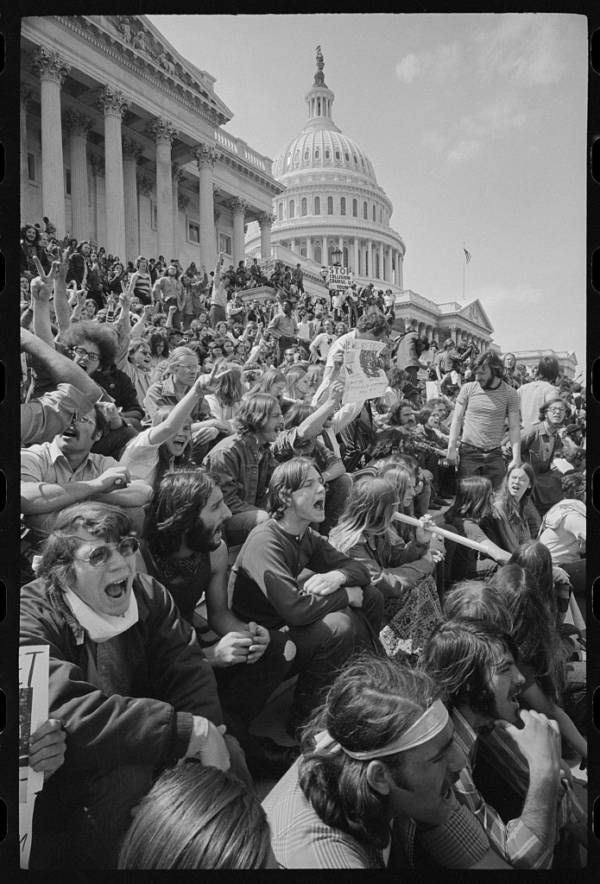
The reaction was almost instantaneous and enormous. Within days, student strikes spread across the country. More than 4 million students participated in organised walkouts. Over 450 colleges and universities shut down entirely, some for the remainder of the semester.
Just five days after the shootings, 100,000 people gathered in Washington, D.C. Nixon was taken to Camp David for two days for his own protection. The 82nd Airborne was deployed to the basement of the executive office building. Charles Colson, counsel to the president, later recalled walking among the soldiers with their helmets and rifles and thinking: "This can't be the United States of America."
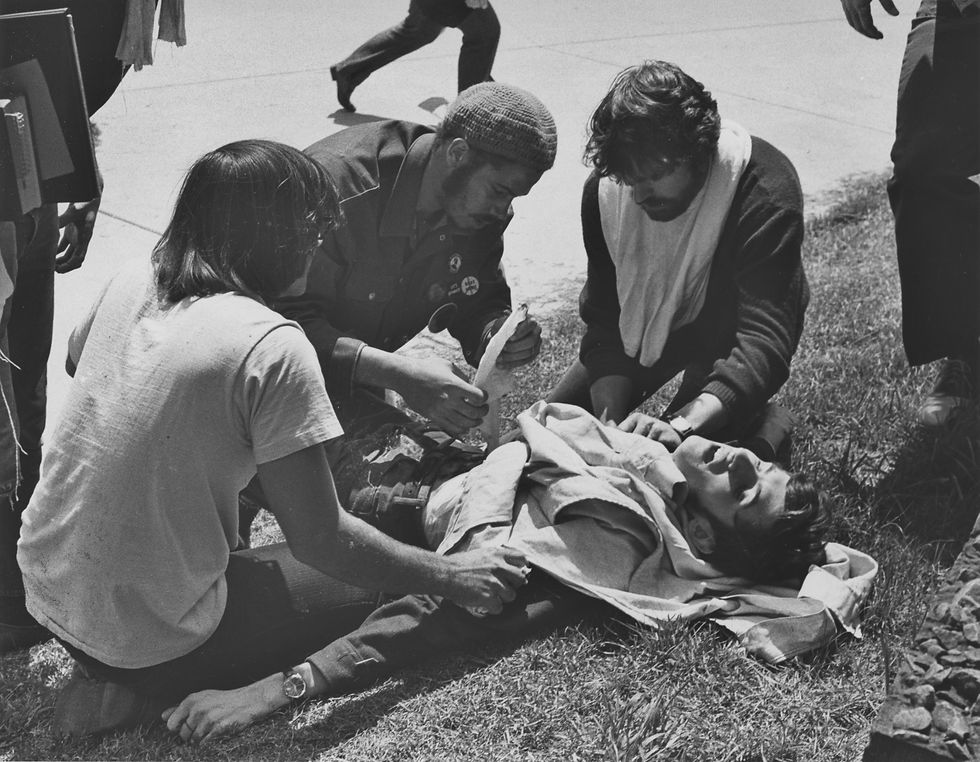
The Pulitzer Prize-winning photograph taken by Kent State photography student John Filo captured Mary Ann Vecchio, a 14-year-old runaway, kneeling and screaming over Jeffrey Miller's body. It became one of the most reproduced images in the history of American photojournalism. Crosby, Stills, Nash and Young recorded "Ohio" within days of the shooting. Neil Young had written it after seeing the photos in Life magazine.
Ten days after Kent State, on May 14, 1970, two students were shot dead by police at Jackson State University in Mississippi under similar circumstances. Because Jackson State was a historically Black university, the event received far less national coverage, a disparity that many civil rights advocates found telling.
The Unanswered Question: Was There an Order to Fire?
For decades after the shooting, the question of whether the guardsmen were given a command to fire remained open. Most guardsmen denied hearing any order. The Guard's official position was that no order was issued.
In 2007, Alan Canfora, one of the nine wounded students, located a copy of an audio tape in a Yale library archive. The original recording had been made by Terry Strubbe, a Kent State communications student, who had put his microphone on his dormitory windowsill that morning. A 2010 audio analysis by forensic audio experts Stuart Allen and Tom Owen concluded that the tape contained a sequence that included the words "Guard!" followed by "All right, prepare to fire!" followed by "Get down!" and then a volley of gunshots lasting 13 seconds.
When the Department of Justice reviewed the case in April 2012, it declined to reopen it, citing "insurmountable legal and evidentiary barriers." The FBI concluded in the same review that what had been described as pistol shots on the tape might have been slamming doors, and that any voices were unintelligible.
Separately, it also emerged in 2012 that after the 1979 civil settlement, the FBI's Cleveland office had destroyed the original Strubbe tape, treating it as no longer needed. In a case involving the deaths of four people, for which no one had ever been criminally convicted, the destruction of the only known audio recording of the event was, to put it plainly, not a decision that improved public confidence in the investigation.
The Informant in the Crowd
One figure whose role has never been fully resolved is Terry Norman, a part-time Kent State student who was, according to FBI reports, working as an informant for both campus police and the FBI's Akron branch. Norman was on the Commons that day, taking photographs to identify protest leaders, while wearing a gas mask and carrying a loaded .38 pistol.
In 1973, Indiana Senator Birch Bayh sent a memo to the Ohio governor suggesting that Norman may have fired the first shot, based on testimony from guardsmen who claimed a gunshot from the protesters' area triggered their response. Norman denied this. FBI Director J. Edgar Hoover had previously denied Norman ever worked for the FBI, a claim Norman himself disputed.
The question of whether Norman fired was never definitively answered. Audio analysis requested by the Justice Department appeared to indicate his weapon hadn't been fired, but the controversy never went away entirely.
The Legacy: What Changed, and What Didn't
The Kent State shootings forced the National Guard to seriously overhaul its crowd control doctrine. The guardsmen on May 4 had no tools between "bayonet" and "live ammunition." In the years after, the military and National Guard began adopting less lethal alternatives: rubber bullets, different crowd control formations, clearer rules of engagement.
Kent State University itself remained closed for six weeks after the shooting. When it reopened, its faculty created one of the earliest conflict resolution degree programmes in the U.S., partly as a direct response to what had happened. That programme, now called the Centre for Applied Conflict Management, is still operating.
The 50th anniversary in 2020 brought renewed attention to the event, with several survivors still alive and vocal about their belief that the full truth had never been established. The Kent State Truth Tribunal, founded in 2010 by the family of Allison Krause, continued to push for an independent investigation through the United Nations Human Rights Committee.
Nixon's aide H.R. Haldeman later wrote in his memoir that the Kent State shootings marked the beginning of the slide toward Watergate, the beginning of the end for the Nixon administration. Whether that's accurate history or convenient framing is debatable. What's harder to debate is the simpler fact: four young people went to university one morning and didn't come home, and the country's government concluded, through a series of legal manoeuvres, that nobody was responsible.

A Quick Timeline
April 30, 1970: Nixon announces the Cambodian invasion on national television.
May 1: Anti-war rally on the Kent State Commons. Another rally planned for May 4.
May 1 evening: Violence in downtown Kent. Mayor declares a state of emergency.
May 2: National Guard arrives. The ROTC building burns to the ground.
May 3: Governor Rhodes makes inflammatory press conference. More confrontations overnight.
May 4, 12:24pm: 28 guardsmen fire 67 rounds in 13 seconds. Four students killed, nine wounded.
September 1970: Scranton Commission declares the shootings unnecessary, unwarranted, and inexcusable.
October 1970: Senator Young reveals FBI summary: the Guard's self-defense claims were "fabricated subsequent to the events."
November 1974: Federal civil rights charges against eight guardsmen dismissed by Judge Battisti.
January 1979: Civil case settled out of court. $675,000 paid by Ohio. A statement of regret, not an apology.
2010: Audio analysis of Strubbe tape suggests a command to fire preceded the shooting.
2012: DOJ declines to reopen case. FBI Cleveland office admits destroying the original Strubbe tape.
Sources
Lewis, J.M. & Hensley, T.R., "The May 4 Shootings at Kent State University: The Search for Historical Accuracy," Kent State University: https://www.kent.edu/may-4-historical-accuracy
I.F. Stone, "Fabricated Evidence in the Kent State Killings," New York Review of Books, December 3, 1970: https://www.nybooks.com/articles/1970/12/03/fabricated-evidence-in-the-kent-state-killings/
"Wanted: The Truth About The Kent State Killings," History News Network (2004): https://www.historynewsnetwork.org/article/wanted-the-truth-about-the-kent-state-killings
"She survived the 1970 Kent State shooting," NPR (May 4, 2024): https://www.npr.org/2024/05/04/1249023924/kent-state-shooting-activists-protests-survivor
"After 39 Years, Events Surrounding Kent State Massacre Remain Unresolved," Democracy Now! (May 7, 2009): https://www.democracynow.org/2009/5/7/after_39_years_events_surrounding_kent
"How old were the victims?" Kent State University Libraries Special Collections: https://www.library.kent.edu/special-collections-and-archives/how-old-were-victims
Kent State shooting, Encyclopaedia Britannica: https://www.britannica.com/event/Kent-State-shootings/May-4
Jeffrey Miller (shooting victim), Wikipedia: https://en.wikipedia.org/wiki/Jeffrey_Miller_(shooting_victim)
Terry Norman, Wikipedia: https://en.wikipedia.org/wiki/Terry_Norman
"Uncovering the Kent State Cover-Up," CounterPunch (September 27, 2012): https://www.counterpunch.org/2012/09/27/uncovering-the-kent-state-cover-up/
The Kent State Shootings, PBS American Experience: https://www.pbs.org/wgbh/roadshow/articles/the-kent-state-shootings/