

The World's Oldest Sick Note: Ancient Egyptians Had a 3,200-Year-Old Attendance Register
- May 11
- 6 min read

Calling in sick to work is apparently one of humanity's oldest traditions. A 3,200-year-old limestone tablet sitting in the British Museum turns out to be the world's earliest known workplace attendance record, and the excuses workers gave for missing their shifts are every bit as creative as anything you'd hear in a modern office.
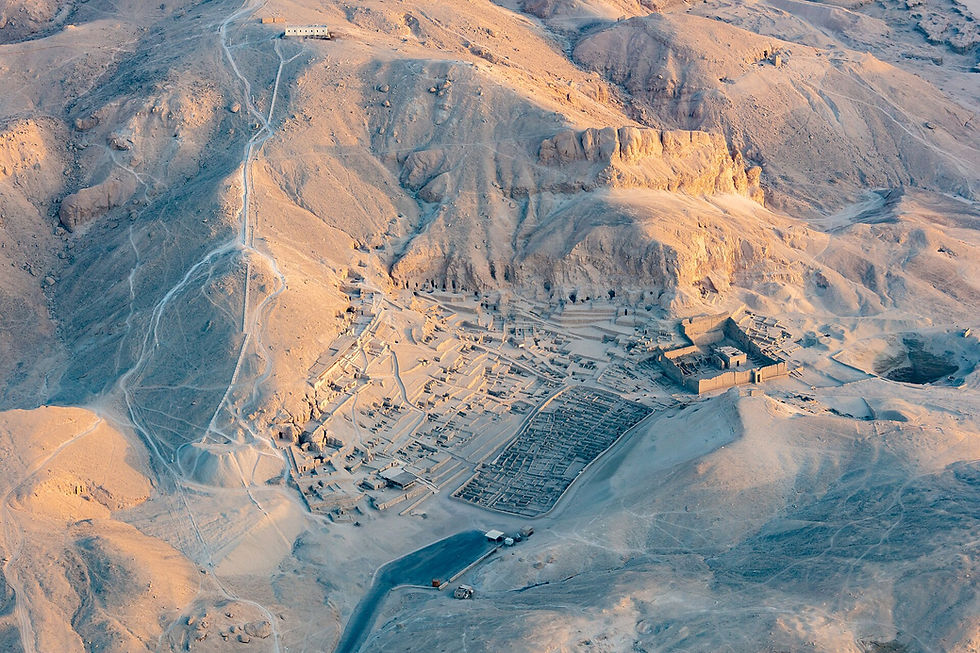
The tablet, known as an ostracon, dates to around 1250 BCE and covers 280 working days during Year 40 of the reign of Ramesses II. It was excavated from Deir el-Medina, a remarkable walled village on the west bank of the Nile near Luxor where the skilled artisans who built the royal tombs in the Valley of the Kings lived and worked. This wasn't a village of ordinary labourers. Its residents were draughtsmen, masons, painters, and scribes who knew state secrets about the locations and layouts of royal burial chambers, which is partly why the pharaonic administration kept such close tabs on them.
The Tablet Itself
The ostracon measures 38.5 by 33 centimetres and is inscribed in New Egyptian hieratic script using red and black ink. The front carries 24 lines of text, the back a further 21. On the right edge of each side, 40 workers' names are listed in columns. To the left of each name, dates are written in black ink, recorded by season and day number in the Egyptian calendar, such as "month 4 of Winter, day 24." Above each date, a word or short phrase in red ink records the reason the worker didn't show up.
The scribe who kept this record never signed their name anywhere on the tablet. What they left behind, however, is arguably more valuable than any personal signature: a window into the very human rhythms of daily life more than three thousand years ago.

Who Were the Workers?
The men recorded on this tablet were part of a state-employed workforce living at Deir el-Medina, known in ancient times as Set-Maat, meaning "The Place of Truth." The village was established during the early 18th Dynasty, likely during or shortly after the reign of Amenhotep I around 1504 BCE, specifically to house the families of tomb builders.
Living conditions were surprisingly comfortable by ancient standards. Each family received a house, servants, and government-supplied food and water, which had to be hauled into the desert village by water carriers from the Nile. Workers were paid in rations of grain, beer, fish, oil, and linen rather than coin. The community was literate and tightly organised. Archaeologists have recovered more than ten thousand ostraca from Deir el-Medina alone, covering everything from administrative records and private letters to love poetry, legal disputes, and wage records.
It was also, as it turns out, a community that took full advantage of its right to call in absent.
The Reasons for Absence
Illness appears most frequently across the tablet, recorded over a hundred times. One worker named Aapehti clocked up around eleven absences for being ill across the 280-day period covered by the register, and on at least one occasion he was noted as "making offerings to god," which scholars suspect may have been connected to his attempts to recover his health through prayer and ritual.
Huynefer was frequently listed as "suffering with his eye," suggesting either a chronic condition or a recurring infection. Given that ancient Egypt's desert environment made eye diseases extremely common, his entries likely reflect a real and persistent ailment rather than a convenient excuse.
On month 4 of Spring, day 17, a worker named Seba missed his shift because a scorpion had bitten him. On month 4 of Winter, day 24, a man named Pennub stayed home because his mother was ill.
Both entries feel immediately familiar, the kind of thing anyone might text their manager about today.
Family obligations beyond illness appear repeatedly. Several workers, including one named Buqentuf, took time off to embalm and wrap deceased relatives. In ancient Egypt, proper preparation of the dead was a serious religious duty, not something that could be delegated or postponed. Missing that work to attend to a family burial wasn't just understandable; it was expected.
Brewing Beer as a Legitimate Excuse
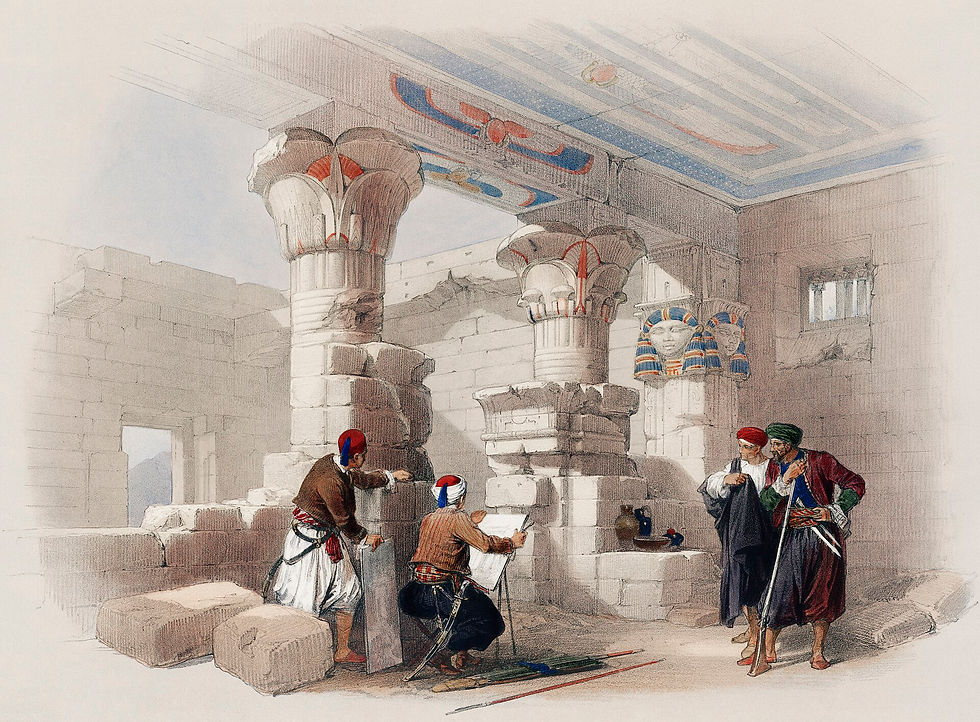
One of the reasons that strikes modern readers as strangest is actually among the most frequently recorded: brewing beer. More than ten workers cited it as their reason for absence, and at least one man, Manninakhtef Huy, took three separate days off for brewing, on month 1 of Winter days 17 and 18, and again on month 2 of Winter day 17.
This wasn't the ancient equivalent of "I had a big night." Beer in ancient Egypt wasn't recreational in the way most people picture it today. It was a daily dietary staple, consumed in large quantities and by everyone including children. The British Museum notes that workers building the pyramids at Giza received a ration of over ten pints of beer per day as part of their standard compensation. Beer was also associated with several deities, most notably the goddess Hathor, and had a genuine place in religious festivals and ceremonies.
Brewing your own supply was a household necessity. Running out wasn't just an inconvenience; it was a practical problem that affected the whole family's nutrition. A worker asking for a day off to brew would have been making a request entirely recognisable to his supervisors.
"Wife or Daughter Bleeding"
Perhaps the most striking entry to modern eyes is the phrase "wife or daughter bleeding," which appears several times across the tablet as a reason for male workers to stay home. This is a reference to menstruation. In ancient Egypt, menstruating women observed a period of ritual impurity and withdrew from certain household duties. The men in those households were apparently expected to stay home and manage the additional workload.

The fact that this was recorded as an accepted, unremarkable reason for absence suggests it was a normalised part of the social contract between workers and their supervisors, rather than something requiring special pleading.
Other Reasons: Fetching Stones, Helping the Scribe
Several workers were absent because they'd been called away to perform tasks for their superiors. Amenmose, for instance, was noted as "fetching stones for the scribe." Running errands for officials or lending labour to other parts of the administrative machine was apparently permitted in reasonable measure and worth documenting in the register rather than leaving unexplained.
A Community That Also Went on Strike
The attendance record captures ordinary absences, but Deir el-Medina's workforce wasn't always quietly cooperative. Around a century after this ostracon was made, in the 29th year of the reign of Ramesses III (approximately 1157 BCE), the same community of tomb workers staged what is now recognised as the earliest recorded labour strike in history.
Their grain rations, which served as their wages, had been delayed for 18 days. The workers downed tools, marched out of the village, and staged a sit-in at the mortuary temple of Thutmose III, shouting that they were hungry. A scribe named Amennakht recorded the events on what is now known as the Turin Strike Papyrus, held at the Museo Egizio in Turin. Officials eventually released the missing grain and the workers returned, but the action set a precedent. Similar protests continued until the end of Ramesses III's reign.
The Guinness World Records formally recognises this as the first recorded strike in human history.
What the Ostracon Tells Us
The tablet registered as EA5634 in the British Museum's collection is small enough to carry under your arm, but the story it holds is disproportionately large. It shows a workforce of skilled artisans who were sick, tired, grieving, and responsible for ageing parents, young families, and household tasks that couldn't always wait. It shows employers who apparently accepted all of this as part of the deal.
There's something quietly extraordinary about the fact that a limestone chip from 3,200 years ago can make the daily negotiation between work and life feel completely universal. The specific reasons shift across the centuries, no one today is likely to claim scorpion bite or beer brewing as an excuse, but the underlying tension hasn't changed at all.
The workers of Deir el-Medina were some of the most skilled craftspeople in the ancient world, carving and painting some of the most celebrated art in human history. They were also, it turns out, people who occasionally just couldn't make it in.
Sources
British Museum Collection Object EA5634: https://www.britishmuseum.org/collection/object/Y_EA5634
My Modern Met, Ancient Egyptians Kept Work Attendance Records: https://mymodernmet.com/ancient-egyptians-attendance-record/
Ancient Origins, Ancient Egyptian Worker Took Sick Leave to Embalm His Mother: https://www.ancient-origins.net/weird-facts/work-ancient-egypt-0017104
Centre for the Study of Manuscript Cultures, University of Hamburg, Ostracon No. 54: https://www.csmc.uni-hamburg.de/publications/aom/mom/54-en.html
Good.is, 3,200-Year-Old Egyptian Tablet Shows Bizarre Excuses: https://www.good.is/3-200-year-old-egyptian-tablet-shows-some-of-the-bizarre-excuses-people-made-to-miss-work-ex1/
World History Encyclopedia, The First Labor Strike in History: https://www.worldhistory.org/article/1089/the-first-labor-strike-in-history/
Guinness World Records, First Recorded Strike: https://www.guinnessworldrecords.com/world-records/first-recorded-strike
Wikipedia, Deir el-Medina Strikes: https://en.wikipedia.org/wiki/Deir_el-Medina_strikes
Papyrus Stories, The First Recorded Strike in History: https://papyrus-stories.com/2022/03/15/the-first-recorded-strike-in-history/
Explore Luxor, Deir el-Medina: https://exploreluxor.org/deir-el-medina/
History Skills, Deir el-Medina: The Mysterious Ancient Village: https://www.historyskills.com/classroom/ancient-history/deir-el-medina/
Exploration Vacation, An Ancient Worker's Village: https://explorationvacation.net/workers-village-deir-el-medina-luxor-egypt/


