


Carlos Lehder and Norman’s Cay: The Cocaine Empire in Paradise
Updated: Oct 6

Imagine an idyllic Caribbean island transformed into a fortress of wealth and power, hidden behind crystal clear waters and white sandy beaches. During the late 1970s and early 1980s, this unlikely setting became one of the most important cocaine distribution hubs in the world. The island was Norman’s Cay, a remote outpost in the Bahamian Exumas that fell under the control of Carlos Enrique Lehder Rivas, a co founder of Colombia’s Medellín Cartel alongside Pablo Escobar.
For several years Norman’s Cay functioned as the centre of a vast airborne drug pipeline between South America and the United States. Private aircraft arrived daily carrying hundreds of kilograms of cocaine from Colombia. The cargo was then broken down, reloaded into smaller planes, and flown north to Florida and other parts of the American south. At the height of the operation the island operated almost like a miniature state. Armed guards patrolled the airstrip, radar systems monitored incoming aircraft, and Lehder’s associates controlled nearly every building on the island.
What had once been a quiet resort island for wealthy Americans became something very different.
One Bahamian police officer later reflected on the period:
“It was surreal. For a few years that tiny island was at the centre of a global business and most of the world had no idea it was happening.”

The Early Days: Setting the Stage
Carlos Lehder was born on 7th September, 1949 in the city of Armenia in Colombia’s coffee growing region. His upbringing was shaped by two very different influences. His father, Klaus Wilhelm Lehder, was a German engineer who had emigrated to Colombia in 1928. His mother, Helena Rivas, came from a prosperous Colombian family connected to the jewellery trade and local society.
The mixture of German discipline and Colombian entrepreneurial culture produced a complex personality. Lehder later developed a fascination with politics, ideology and revolutionary rhetoric that sat uneasily beside his growing involvement in organised crime.
During the late 1960s and early 1970s Lehder spent time in the United States, moving between New York and Florida. This was a period when cocaine was becoming fashionable among musicians, nightclub owners and wealthy professionals. Lehder observed the rising demand and began to see opportunity.
His early criminal activities involved car theft and small scale drug smuggling. That trajectory changed dramatically after he was arrested and sent to the Federal Correctional Institution in Danbury, Connecticut. There he met another prisoner who would alter the course of the cocaine trade: George Jung.

The Birth of the Cocaine Air Bridge
George Jung had experience smuggling marijuana into the United States using small aircraft. Lehder immediately realised the same method could be used for cocaine, which was far more profitable and far easier to transport in smaller quantities.
At the time most cocaine entered the United States through small shipments carried by couriers or hidden in cargo. Lehder and Jung envisioned something far more ambitious. They proposed a network of aircraft flying between Colombia and the Bahamas before continuing to Florida.
The Bahamas were perfectly positioned for such a scheme. Hundreds of islands sat directly along the flight path between South America and the southeastern United States. Many of them had small airstrips and very little law enforcement presence.
The idea became known among investigators as the Caribbean Air Bridge.
Once Lehder was released from prison he began turning the idea into reality. He quickly established contacts with Colombian cocaine producers and organised pilots willing to fly risky routes across the Caribbean.

Norman’s Cay: From Sleepy Island to Cocaine Hub
By the late 1970s Lehder needed a permanent base of operations. He eventually settled on Norman’s Cay, a small island located roughly 210 miles southeast of Florida in the Exuma chain of the Bahamas.
Originally developed during the 1960s as a quiet holiday community, Norman’s Cay had around one hundred houses, a marina, a yacht club and a modest airstrip used by private aircraft.
To Lehder it was perfect.
Over the next few years he systematically took control of the island. Some properties were purchased outright. Others were reportedly acquired through intimidation and coercion. Residents later described armed men arriving and telling them their homes had changed ownership.
One former resident recalled:
“They came with guns and said the island belonged to them now.”
Lehder invested an estimated $4.5 million dollars into transforming Norman’s Cay into a fortified smuggling centre. The existing runway was expanded to roughly 3,300 feet, long enough for large cargo aircraft to land fully loaded with cocaine.
Radar equipment was installed to monitor approaching aircraft. Armed guards patrolled the island. Doberman attack dogs were used as an additional security measure.
At the centre of the island the Colombian flag was reportedly flown, and visitors sometimes described hearing the Colombian national anthem played during gatherings.
Life in the Cocaine Kingdom
By 1978 Norman’s Cay had become one of the busiest drug trafficking hubs in the Western Hemisphere. Aircraft loaded with cocaine arrived from Colombia daily. The shipments were then divided and transported onward to the United States using smaller planes.
The majority of flights headed for Florida, Georgia and the Carolinas, where the cocaine was distributed through criminal networks connected to the Medellín Cartel.
Lehder reportedly kept one kilogram of cocaine out of every four that passed through the island. Given the scale of the operation, this made him extraordinarily wealthy.
Investigators later estimated that at its peak as much as eighty percent of cocaine entering the United States passed through Caribbean routes similar to Norman’s Cay.
The island also developed a reputation for excess. Visitors described lavish parties, music playing throughout the night, and a steady flow of pilots, smugglers and guests arriving from across the Americas.
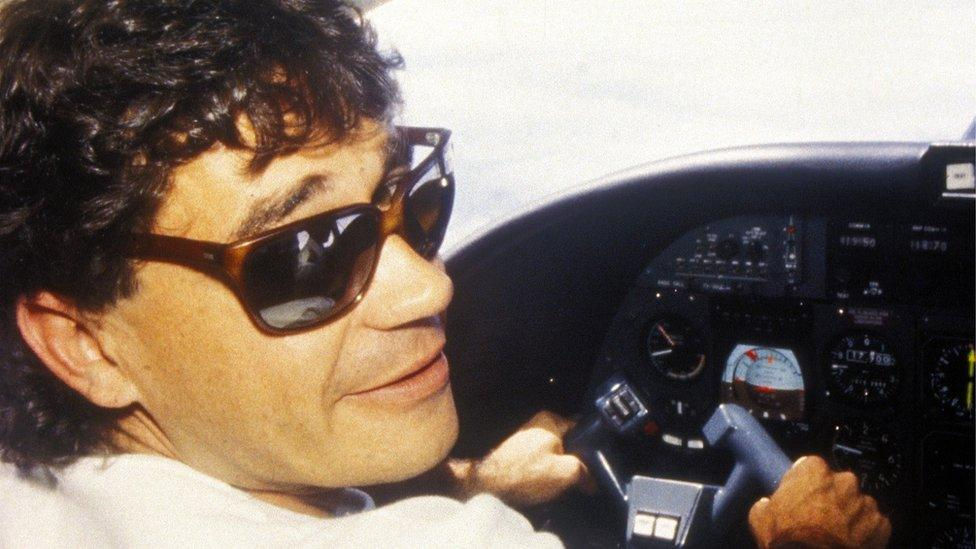
Carlos Toro, one of Lehder’s associates, later described the atmosphere:
“Norman’s Cay was a playground. I have a vivid picture of being picked up in a Land Rover with the top down and naked women driving to come and welcome me from my airplane. And there we partied. It was like Sodom and Gomorrah. Drugs, sex, no police. You made the rules.”
Despite the party atmosphere, the island functioned as a highly organised logistical centre. Radar operators tracked incoming flights. Ground crews unloaded cargo aircraft within minutes of landing. Smaller planes were then loaded for flights to the United States.
The Famous Drug Plane Wreck
One of the most visible reminders of Norman’s Cay’s unusual past still sits quietly in the shallow water just offshore. For visitors arriving today, the rusting remains of a cargo aircraft lying half submerged near the island’s edge appear almost surreal against the backdrop of turquoise water and bright Caribbean skies.
The wreck dates back to the height of Carlos Lehder’s smuggling operation in the late 1970s or early 1980s, when the island was receiving a constant stream of aircraft loaded with cocaine from Colombia. The aircraft is widely believed to have been a Curtiss C 46 Commando, a large twin engine cargo plane originally designed during the Second World War. These aircraft later became popular among smugglers because they could carry large loads and operate from relatively short runways.

Lehder had extended the Norman’s Cay airstrip to roughly 3,300 feet, just long enough for heavily loaded cargo aircraft to land. Pilots regularly flew from clandestine airfields in Colombia to the Bahamas, where the cocaine would be unloaded and transferred onto smaller aircraft bound for the United States.
At some point during this period, the aircraft crashed while attempting to land or take off from the island. With smuggling flights arriving constantly, Lehder reportedly had little interest in salvaging the wreck. Instead, the damaged plane was pushed into the shallow water beside the runway and left where it fell.
Over time the ocean slowly stripped the aircraft of its paint and fittings, while marine life began to colonise the metal frame. Yet the outline of the fuselage and wings remains clearly visible beneath the water.
Today the wreck is one of Norman’s Cay’s most photographed curiosities. Local residents sometimes refer to it simply as “the drug plane.” It serves as a quiet reminder that this tranquil Caribbean island once played a central role in one of the largest cocaine trafficking operations in modern history.

The Cocaine Cowboys Era
Norman’s Cay was not just an isolated smuggling base. It played a central role in the period later known as the Cocaine Cowboys era.
During the late 1970s and early 1980s Miami became the primary gateway for Colombian cocaine entering the United States. Violence between trafficking organisations increased dramatically. Drug related shootings and assassinations became common in South Florida.
Norman’s Cay functioned as a supply depot feeding that growing market.
At the peak of the operation hundreds of kilograms of cocaine arrived on the island every day.
The profits were enormous. Lehder became one of the wealthiest members of the Medellín Cartel and at times claimed to be worth billions of dollars.
Political Influence and Controversy
Lehder’s ambitions extended beyond drug trafficking. He sought political influence that might protect his operations from extradition and prosecution.
He reportedly attempted to bribe senior Bahamian officials in order to ensure that his activities continued without interference. Allegations even reached Prime Minister Lynden Pindling, though direct involvement was never proven.
The controversy became so significant that the Bahamian government launched a formal investigation known as the Commission of Inquiry into Drug Trafficking.
The hearings exposed extensive smuggling activity across the islands and damaged the Bahamas’ international reputation.
Meanwhile in Colombia, Lehder began promoting an unusual political movement known as the National Latin Movement. The organisation combined Colombian nationalism with anti American rhetoric and far right political symbolism.
Its primary objective was to abolish Colombia’s extradition treaty with the United States.
Lehder even attempted to enter politics and used his fortune to finance propaganda campaigns.
He once made a remarkable offer to pay Colombia’s entire external debt in exchange for the abolition of extradition laws. The proposal was never taken seriously by the government but it demonstrated the extraordinary wealth he had accumulated.
The Beginning of the End
By the early 1980s pressure from American law enforcement and international authorities began to intensify. In 1981 the United States Drug Enforcement Administration worked with Bahamian officials to dismantle much of the smuggling infrastructure on Norman’s Cay.
Lehder managed to escape the island before he could be arrested, but his Caribbean base was effectively finished.
In July 1982 he carried out one final theatrical gesture. Flying over Nassau’s Clifford Park, he dropped hundreds of pamphlets reading “DEA go home”. Some of the leaflets were attached to one hundred dollar bills.
It was a symbolic farewell to the island that had made him rich.

Capture and Extradition
Lehder continued operating in Colombia for several more years but his influence within the Medellín Cartel was declining. Other cartel leaders reportedly viewed his political activism and public visibility as dangerous.
On 4th February, 1987 Colombian police arrested Lehder at a ranch near Medellín. Within hours he was placed on a plane and extradited to the United States.
He was later convicted on multiple drug trafficking charges and initially sentenced to life imprisonment plus 135 years.
His sentence was eventually reduced after he agreed to testify against Panamanian military ruler Manuel Noriega.
Lehder spent more than three decades in American prisons. In June 2020 he was released and deported to Germany.
Norman’s Cay Today
Today Norman’s Cay is once again a quiet island.
Many of the buildings used during the smuggling era have disappeared or been rebuilt. Luxury homes have returned and the marina occasionally hosts private yachts.
Yet traces of the past remain.
The aircraft wreck still lies in shallow water near the shore, and older residents of the Bahamas still remember the years when a tiny island briefly became the centre of one of the largest drug trafficking operations in history.
It stands as a strange reminder of how geography, ambition and criminal ingenuity briefly turned a Caribbean holiday island into the beating heart of the global cocaine trade.


